QUICK ANSWER
A truck dispatching course in the USA costs roughly $150 to $1,500 in 2026, with most credible online programs sitting between $300 and $800. Community college workforce certificates run higher, around $500 to $2,500. Tuition is only part of the picture — load board subscriptions, business registration and software add $100 to $300 per month once you start working.
KEY TAKEAWAYS
- Realistic 2026 range: $150–$1,500 for online truck dispatcher training. Entry recorded programs start near $185; live mentored programs commonly sit around $600.
- College-based workforce certificates in logistics or transportation run higher, roughly $500 to $2,500 in total.
- Tuition is not your total cost. Budget an extra $100–$300 per month for load boards, phone, software and business overheads.
- Load board entry plans start around $45–$49 per month; mid-tier plans with broker credit data run $99–$149; full rate-analytics plans reach $149–$199.
- Price does not equal quality. A $79 course and an $800 course can share the same syllabus — the difference is live practice, document templates and support.
- Payback is fast when the training works. One truck at 7% of $6,000 weekly gross returns $420 a week, so a $600 course pays for itself in under two weeks of live dispatching.
- Never pay for a "truck dispatcher license." No such licence exists in the USA. Broker authority may apply depending on your structure — that's a legal question, not a training product.
- The most expensive mistake is buying a cheap course that skips FMCSA compliance, then rebuying a proper one three months later.
INTRODUCTION
Most people searching for truck dispatching course cost in the USA get the same unhelpful answer: "it depends." At Trusinva Tech Solutions, we deliver training and technology for the American logistics market, so we see the real numbers — what providers charge, what students actually receive, and where budgets quietly overrun after enrolment. This guide publishes those numbers openly, including the price of our own truck dispatching course category and what sits inside it. If you are still at the research stage, read our overview of a truck dispatching course in the USA for the curriculum side, our guide to starting a truck dispatching business in the USA for the setup costs that follow, and the truck dispatcher salary USA 2026 breakdown to see how quickly the investment returns.
Here is the short version before the detail. Training is cheap relative to the income it unlocks, but the sticker price hides two things: what the course leaves out, and what you must buy afterwards to actually work. This article covers both.
1. What Does a Truck Dispatching Course Cost in the USA?
Truck dispatching courses in the USA cost between $150 and $1,500 in 2026, with the majority of credible online programs priced at $300 to $800. Recorded self-paced courses sit at the bottom of that range. Live, mentor-led programs with document packs and post-course support sit at the top. College-run certificates form a separate, higher tier.
The market has three distinct layers, and confusing them is why price comparisons feel impossible.
| Layer | Typical 2026 Price | Format |
| Independent online courses | $150–$800 | Recorded or live, private provider |
| Premium mentored programs | $800–$1,500 | Small-batch live, mentorship, business setup help |
| College workforce certificates | $500–$2,500 | Continuing education or credit-bearing |
Short continuing education courses may cost a few hundred dollars, while more comprehensive workforce certificates in logistics or transportation range from about $500 to $2,500 total, with public community colleges generally more affordable for in-state residents.
Important note: none of these prices buy you a licence. The United States does not issue a truck dispatcher licence, so what you are buying is skill and structure — nothing more, nothing less.
2. What Actually Drives the Price
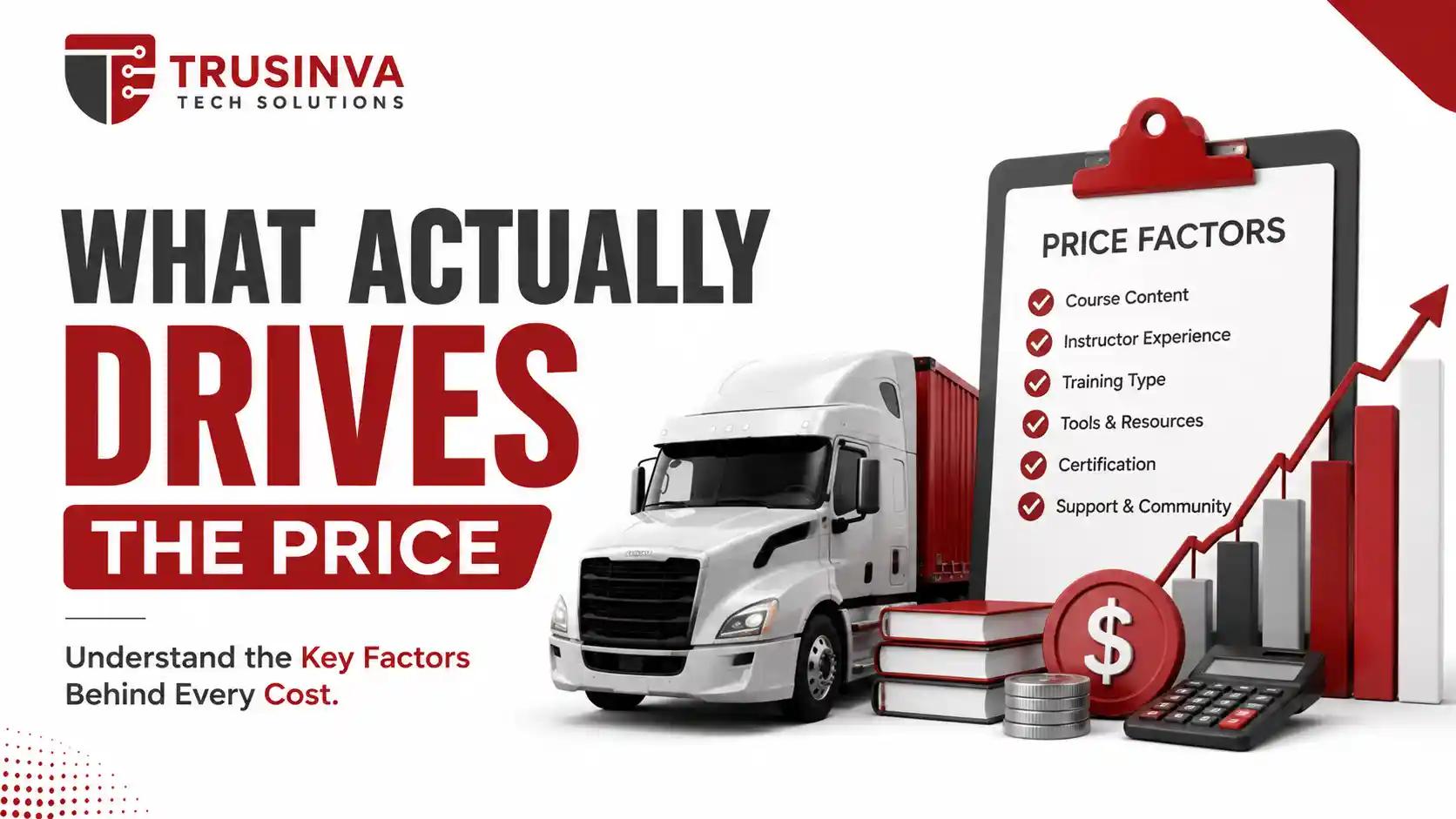
Five factors explain almost every price difference in the market: delivery format, instructor access, live load board practice, document templates, and post-course support. Curriculum topics barely differ between providers. Delivery does.
Delivery format. Recorded video costs a provider nothing to deliver at scale, so recorded courses are cheap. Live sessions consume instructor hours, so they cost more.
Instructor access. A course where you can ask a working dispatcher a question on Tuesday afternoon costs more than one where you email support and wait.
Live load board practice. Providers who give students guided practice on a real load board are paying for a subscription seat. That cost is passed on — and it is worth paying.
Document templates. Dispatch service agreements, carrier packets, rate confirmations and invoice templates take legal review to produce properly. Free courses give you generic PDFs. Good courses give you documents you can actually use.
Post-course support. Thirty to ninety days of office hours, community access or mentorship is the single most expensive component to deliver — and the one most correlated with students actually finding carriers.
Expert observation: when we audit competing syllabi, the topic lists are nearly identical. The gap is always in rows three, four and five above. If a provider cannot show you a redacted sample agreement, you are paying for videos.
3. Price Bands: What You Get at Each Level
| Price Band | Format | Typically Includes | Missing | Best For |
| $0 | YouTube, free trials | Vocabulary, industry overview | Everything practical | Deciding if the career interests you |
| $150–$299 | Recorded self-paced | Video modules, certificate of completion, basic templates | Live practice, real support, compliance depth | Supplementing structured training |
| $300–$799 | Recorded + live Q&A | Full modules, load board walkthroughs, usable document pack, community access | One-to-one mentorship | Most serious beginners |
| $800–$1,500 | Small-batch live | Mock negotiation calls, guided load board practice, business setup guidance, extended support | Job guarantees (nobody can honestly offer these) | People building a dispatch business |
| $1,500–$2,500 | College certificate | Structured assessment, institutional credential, possible financial aid | Speed, industry-current tactics | Learners who need a formal credential |
| $2,500+ | Premium / done-with-you | Should include mentorship, carrier acquisition help, systems setup | Frequently nothing extra — verify hard | Only with verifiable outcomes |
Warning: the $2,500+ band contains most of the market's overpricing. Before paying, ask exactly what is delivered that the $1,000 band does not deliver, and ask for the names of three past students you can contact.
4. Real Market Pricing Examples (2026)
Published prices from active US providers confirm the $150–$1,500 range. These are illustrative market data points, not endorsements.
One US trucking academy offers its dispatcher training from $185, bundled with a certificate of completion and a set of included resources. Another provider prices its truck dispatcher training at $600 as a full inclusive price covering both training and supporting materials, with live mentor sessions scheduled around USA time zones. Live in-person programs typically secure a place with a deposit — one Chicago-area classroom program takes a $200 deposit to reserve a seat.
At the institutional end, credit-bearing certificates at regionally accredited colleges often accept the Free Application for Federal Student Aid (FAFSA), while noncredit continuing education programs may not, and some states offer workforce grants or tuition assistance that can significantly reduce out-of-pocket costs.
What this tells you: the honest floor for a structured course is roughly $185. The honest ceiling for an online program with genuine live components is roughly $1,500. Anything outside that range needs explaining.
5. The Hidden Costs Nobody Advertises
Your course fee typically represents 20–40% of your first-year cost of entry. The rest is subscriptions, registration and tools. Providers rarely mention this, which is why new dispatchers stall two weeks after graduating.
| Hidden Cost | Typical 2026 Range | When You Need It |
| Load board subscription | $42–$195/month | Before your first load |
| LLC formation (state fee) | $50–$500 one-off | Before signing a carrier |
| EIN | Free (IRS) | With the LLC |
| Registered agent | $0–$150/year | Depends on state |
| Business phone / VoIP | $10–$30/month | Immediately |
| Email + document storage | $6–$20/month | Immediately |
| Errors & omissions insurance | $400–$1,500/year | Before scaling |
| Contract legal review | $200–$800 one-off | Before your first agreement |
| TMS or dispatch software | $0–$100/month | After 2–3 trucks |
| CRM | $0–$50/month | When you start prospecting carriers |
| Website | $0–$1,000 one-off | When marketing to carriers |
The legal review line is the one people skip and regret. Your dispatch service agreement is the document that evidences your relationship with a motor carrier, and it deserves a professional read before you sign eight of them.
For the technology side, our breakdowns of CRM features that matter and CRM development solutions for US sales teams show what is worth paying for early and what can wait. If you would rather not build from scratch, our CRM development service covers custom pipelines for small dispatch operations.
6. Load Board Subscription Costs in 2026
Load board access is your largest recurring cost after training, typically $42 to $195 per month depending on tier. This is not optional. A dispatcher without load board access cannot source freight.
Entry plans on the two dominant boards start around $45–$49 per month with basic load access; mid-tier plans run $99–$149 per month and add broker credit data; full-feature plans reach $149–$199 per month with rate analytics. Pricing tops out considerably higher at the fleet level, with premium tiers reaching roughly $345 per month for full rate data, broker credit tools and lane analytics. Budget alternatives sit lower, with basic tiers across the smaller boards running roughly $35–$65 per month.
| Tier | Approx. Monthly Cost | What Unlocks |
| Entry | $35–$49 | Load search and truck posting |
| Mid | $99–$149 | Broker credit scores, better filters |
| Premium | $149–$199 | Rate benchmarking and lane analytics |
| Fleet/Pro | $200–$345 | Full analytics for multi-truck operations |
Cost-saving tip that actually works: start on an entry tier while learning, and upgrade to a rate-analytics tier only once you are booking regularly. Paying annually rather than monthly commonly trims roughly 10–20% off the monthly rate, so if you will be on the board year-round, annual usually wins.
Second tip: many carriers already hold a subscription. If you dispatch for a carrier who does, you may not need your own seat at all in month one.
7. Total Cost to Start Dispatching: Full Budget Table
A realistic all-in first-year budget for an independent dispatcher runs $2,000 to $5,500, of which training is $300 to $1,500. A dispatcher employed by a carrier spends only the course fee.
| Scenario | Course | Setup (one-off) | Monthly Running | Year-1 Total |
| Lean (employed dispatcher) | $300 | $0 | $0 (employer provides tools) | ~$300 |
| Starter (one carrier, entry board) | $400 | $250 | ~$90 | ~$1,730 |
| Standard (2–3 carriers, mid board) | $700 | $900 | ~$220 | ~$4,240 |
| Growth (small fleet, premium board, insurance) | $1,200 | $1,800 | ~$380 | ~$7,560 |
Read the "Lean" row carefully. If your goal is a dispatcher job rather than a dispatch business, your entire cost of entry is the course fee. That is an unusually low barrier compared with almost any other US career path — and it is precisely why the training market is crowded with low-quality operators.
For the full business setup sequence, see our truck dispatching business guide for 2026. If cost benchmarking across services interests you generally, we publish the same transparent approach in software development cost and website development cost in the USA.
8. Is an Expensive Course Worth It? Decision Matrix
Pay more when you need practice and accountability. Pay less when you need information. Use this matrix honestly.
| Your Situation | Recommended Spend | Why |
| Exploring the career, unsure | $0–$150 | Do not overspend on a decision you haven't made |
| Already work in logistics, need US-specific process | $150–$400 | You need gaps filled, not foundations |
| Career changer, no logistics background | $400–$800 | You need structure, drills and support |
| Building a dispatch business from scratch | $800–$1,500 | You need compliance depth and business setup |
| Need a formal credential for employment | $500–$2,500 | An institutional certificate may open specific doors |
| Being sold a "guaranteed income" package | $0 | Walk away |
Original insight from our training desk: the strongest predictor of a student earning within 90 days is not price — it is whether the course forced them to complete live negotiation practice. Programs without call practice produce graduates who know the vocabulary and freeze on the phone. If you can only afford one premium feature, buy that one.
9. Return on Investment: The Payback Math
A $600 truck dispatching course typically pays for itself within two to six weeks of live dispatching. That is the honest arithmetic, and it is the strongest argument against buying the cheapest option available.
Employed dispatcher path. BLS OEWS 2025 data for "Dispatchers, Except Police, Fire, and Ambulance" (SOC 43-5032) shows a national median annual salary of $50,340, with the 10th to 25th percentile band running $36,030 to $42,750. The same May 2025 release lists a mean annual wage of $54,740. Against a median salary, a $600 course represents roughly 1.2% of first-year gross pay.
Independent dispatcher path. Independent dispatch services generally charge 5–10% of a load's gross revenue, or a flat weekly fee per truck.
| Trucks | Weekly Gross per Truck | Fee | Your Weekly Revenue | Monthly |
| 1 | $6,000 | 7% | $420 | ~$1,800 |
| 2 | $6,000 | 7% | $840 | ~$3,600 |
| 3 | $6,000 | 7% | $1,260 | ~$5,400 |
At one truck, a $600 course is recovered in under two weeks of fee income. At three trucks, in under four days. The risk is never the tuition — it is the months spent unable to sign a carrier because the training did not cover acquisition.
Caveat worth stating plainly: SOC 43-5032 includes all non-emergency dispatchers, not truck dispatchers alone, and self-employed income is not captured in that series. Treat the BLS figure as a floor reference, not a forecast.
Detailed regional and model-by-model numbers are in our truck dispatcher salary USA 2026 guide. The carrier-side value case — which you will need to justify your fee — is covered in how truck dispatching services save US carriers money and owner-operator dispatch service benefits.
10. How to Reduce Your Course Cost Legitimately
You can lower training cost without lowering training quality through payment plans, institutional aid, bundled load board discounts, and off-peak enrolment.
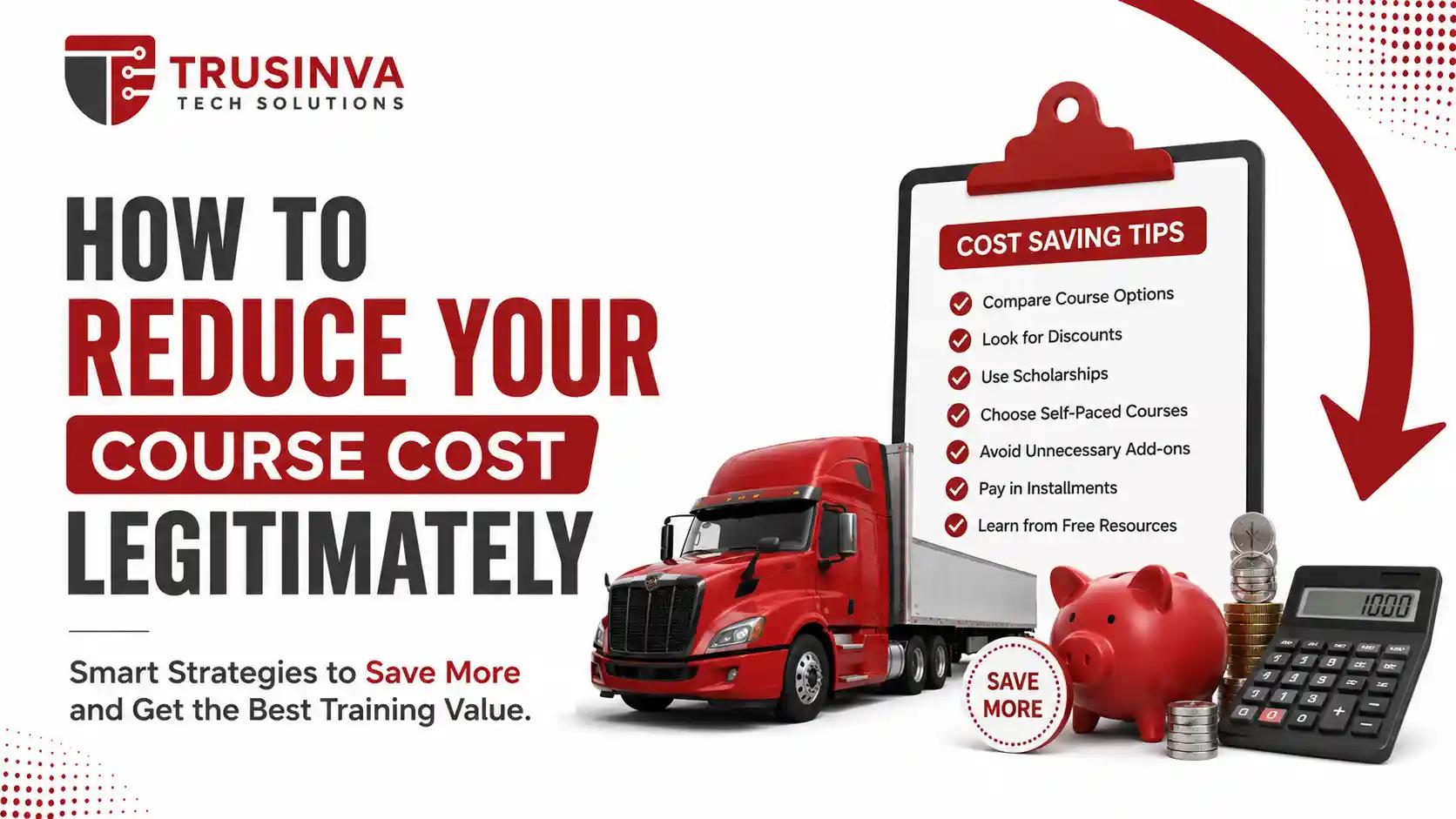
- Ask about payment plans. Most live providers split fees across two or three instalments without interest.
- Check institutional aid. Credit-bearing certificates at regionally accredited colleges often accept FAFSA, and several states run "Promise" programs covering tuition at public community colleges for eligible residents.
- Look for state workforce grants. Some states offer workforce grants or tuition assistance that can significantly reduce out-of-pocket expenses.
- Take bundled load board discounts seriously. Some providers include discounted board access, which can be worth more than the discount on tuition itself.
- Buy annually where it applies. Annual load board billing commonly trims 10–20% off the monthly rate.
- Use free content strategically. Learn vocabulary and industry structure free, then pay only for practice, templates and support.
- Avoid double-buying. The most common overspend is a $99 course followed three months later by a $700 one. Buy the right tier first.
What not to do: do not pick a course because it is $50 cheaper if the cheaper one omits FMCSA compliance content. That $50 is the most expensive discount in the industry.
11. Course Cost vs Certification Cost
Course cost buys training. Certification cost buys a document. In truck dispatching these are usually bundled, which confuses buyers into thinking they are purchasing a regulated credential. They are not.
| Item | Typical Cost | What It Actually Is |
| Course fee | $150–$1,500 | Training and materials |
| Certificate of completion | Usually included | Provider-issued proof you finished |
| Third-party certification | $100–$500 standalone | Private or trade-body credential |
| Government licence | Does not exist | No US federal or state dispatcher licence |
A certificate helps in two narrow ways: it signals to a carrier that you were trained, and it forces you through a structured syllabus. It grants no legal authority to arrange freight. The same distinction applies across vocational fields — we unpacked it in detail in medical billing course vs certification, and the logic transfers directly.
Warning about broker authority. If your dispatch service arranges freight for multiple carriers and exercises discretion in assigning loads between them, FMCSA guidance treats that as brokerage requiring operating authority — with a $75,000 surety bond or trust fund. That is a business cost, not a training cost, and no course can grant it. Any provider implying otherwise is misleading you.
12. Pricing Red Flags and Refund Traps
- "Official dispatcher licence included." No such licence exists. This is the clearest disqualifier.
- "Guaranteed $5,000/month or your money back." Income guarantees in an unregulated field are marketing.
- Permanent countdown timers. If the "last day of the discount" has run for six weeks, the price is the price.
- No published curriculum before payment. You cannot evaluate value you cannot see.
- Refund policy hidden or absent. A serious provider publishes terms plainly.
- "Free load board access forever." Nobody can give away a third-party subscription indefinitely. Discounts, yes. Free forever, no.
- Prices only revealed after a sales call. Transparent pricing is a trust signal.
- Certificate fees revealed at the end. Ask upfront whether the certificate costs extra.
Refund trap to check specifically: many providers void refunds once a percentage of content is accessed — sometimes as low as 10%. Read that clause before you open module one.
13. Cost Comparison for Offshore Learners
For learners outside the USA, the course price is usually the smaller expense — the recurring US-facing overheads matter more. Many US carriers work with offshore dispatchers, so this path is common and legitimate.
| Cost Item | Notes for Offshore Learners |
| Course fee | Same USD price; check regional pricing or payment plans |
| US phone number / VoIP | $10–$30/month, essential for broker credibility |
| Time zone commitment | US business hours — a real cost in lifestyle terms |
| Load board | Often provided by the carrier you dispatch for |
| Payment collection | Factor in international transfer fees |
| Tax treatment | Depends on your residence and contract structure |
The tax question catches people out. If you are contracting with US carriers, understanding US withholding, W-8/W-9 handling and your own residence filing obligations matters. Our USA taxation guide for freelancers, the structured USA taxation course, and our practical walkthrough on learning to file US taxes online cover this properly.
14. Latest 2026 Updates That Affect Curriculum Cost
Compliance content has become more expensive to produce, and that is reflected in course pricing at the upper tiers. Two regulatory developments explain why.
FMCSA final guidance on brokers, bona fide agents and dispatch services (June 2023). This clarified when a dispatch service must hold broker operating authority. Courses that teach it properly require legal review; courses that ignore it do not. That is a genuine cost difference between tiers.
Broker and Freight Forwarder Financial Responsibility rule (effective January 2026). This updated 49 CFR Part 387, retained the $75,000 minimum security as a BMC-84 surety bond or BMC-85 trust fund, and tightened the surrounding rules — trust funds may now hold only hard assets such as cash, US Treasury bonds and irrevocable letters of credit, and a surety or trustee must notify FMCSA within two business days when security drops below the floor.
Practical effect on your budget: broker vetting is now a core dispatcher skill, not an optional extra. A course that teaches you to check bond status, suspension records and payment history before booking is worth paying more for, because a single unpaid load can exceed the entire course fee.
Verify before relying: further rulemaking on broker transaction transparency under 49 CFR 371.3 was in progress during 2026. Confirm current status on FMCSA's site rather than trusting any course's dated slide deck.
15. Expert Tips on Spending Your Training Budget
- Spend on practice, not runtime. Forty hours of video is not better than eight hours of guided load board work.
- Pay for the document pack. A properly drafted dispatch service agreement is worth more than the rest of the course combined.
- Do not buy software before you have a carrier. Spreadsheets run one truck perfectly well.
- Delay your premium load board tier. Start entry, upgrade when volume justifies it.
- Budget for legal review separately. $300 with a transportation attorney is cheaper than one contract dispute.
- Specialize to justify higher fees. Reefer and flatbed dispatching command premiums — see our guide to truck dispatching for flatbed carriers in the USA.
- Automate later, not first. Once you have volume, AI automation services and practical AI for small businesses cut admin hours meaningfully.
- Treat marketing as a phase-two cost. When you're ready to attract carriers, local SEO and digital marketing services outperform cold calling — but not before you can service the clients.
16. People Also Ask
Is truck dispatcher training worth the money? Yes, when the course includes live practice and compliance content. At $300–$800, the fee is typically recovered within a month of dispatching a single truck.
Can I learn truck dispatching for free? You can learn the concepts free. You cannot get guided load board practice, usable legal templates, or negotiation feedback free. In most cases, genuinely free training happens on the job, where employers train new dispatchers internally.
How long is a truck dispatching course? Most online programs run two to six weeks part-time, or roughly 20–40 hours of instruction. College certificates take longer.
Do I need to pay for a load board while studying? Not necessarily. Many courses provide demo or shared access during training. You need your own subscription only when you start booking real loads — unless your carrier already has one.
Are community college dispatcher programs cheaper? Not always cheaper in absolute terms, but they may qualify for financial aid or state workforce grants, which can lower your out-of-pocket cost substantially.
What is the cheapest way to become a truck dispatcher? Get hired by a carrier as a junior dispatcher and learn on the job. Your only cost is a modest course to get through the interview.
Does the course cost include certification? Usually yes, as a certificate of completion. Confirm in writing — some providers charge separately.
How much do dispatchers charge carriers? Typically 5–10% of gross load revenue, or a flat weekly fee per truck.
17. FAQs
Q1. How much does a truck dispatching course cost in the USA in 2026? Between $150 and $1,500 for online programs, with most credible options at $300–$800. College workforce certificates in logistics run roughly $500–$2,500.
Q2. Why do course prices vary so much? Delivery format drives price. Recorded video is cheap to deliver; live instruction, mentorship, guided load board practice and reviewed legal templates are not.
Q3. What is the cheapest credible truck dispatcher course? Structured recorded programs start around $185. Below that, you are usually buying a PDF and a video playlist rather than training.
Q4. What are the hidden costs after the course? Load board subscription ($42–$195/month), LLC registration ($50–$500), business phone, insurance, contract review and eventually dispatch software.
Q5. How much is a DAT or Truckstop subscription? Entry tiers start around $42–$49 per month, mid tiers with broker credit data run $99–$149, and rate-analytics tiers reach $149–$199.
Q6. How fast does the course pay for itself? Dispatching one truck grossing $6,000 weekly at a 7% fee generates about $420 per week, so a $600 course is recovered in under two weeks of live work.
Q7. Is there a licence fee for truck dispatchers? No. The USA does not licence truck dispatchers, so there is no government fee. Broker authority is a separate requirement that applies only to certain business structures.
Q8. Should I pay more for a certified course? Pay more for live practice and support, not for the certificate itself. Certification in this field is privately issued and carries no legal authority.
Q9. Can I get financial aid for dispatcher training? Possibly, at accredited colleges offering credit-bearing certificates. Private online courses generally do not qualify, though many offer instalment plans.
Q10. Is an expensive course better than a cheap one? Not automatically. Compare live practice hours, document templates and support duration — not price tags or module counts.
18. Conclusion
Truck dispatching training in the USA costs $150 to $1,500 in 2026, and the price you should pay depends far less on your budget than on what you intend to do with the skill. If you want a dispatcher job, a $300 course and a good interview will get you there. If you want to run a dispatch service, spend at the $800 level and treat the extra as insurance against the compliance mistakes that end businesses in their first year.
Our recommendation is simple. Ignore module counts and video hours. Compare providers on four things only: live load board practice, negotiation drills with feedback, a document pack you can actually use, and support that continues after the last lesson. Then budget separately for the load board and business setup costs listed in Section 7, because that is where unprepared students stall.
Your next step is to check the numbers against a real curriculum. Review our truck dispatching course and see exactly what sits inside the fee, compare it with the wider training programs and technology services we deliver for US logistics businesses, browse more practical guides on the Trusinva blog, and read about our team on the about page. When you are ready, Book a Seat in the next intake — cohorts stay small so every learner gets live load board time and rate negotiation feedback, and places close early. If you want a cost breakdown mapped to your own situation before committing, contact our advisors and we will walk you through it honestly. Book a Seat today and start earning back your training cost within weeks, not years.