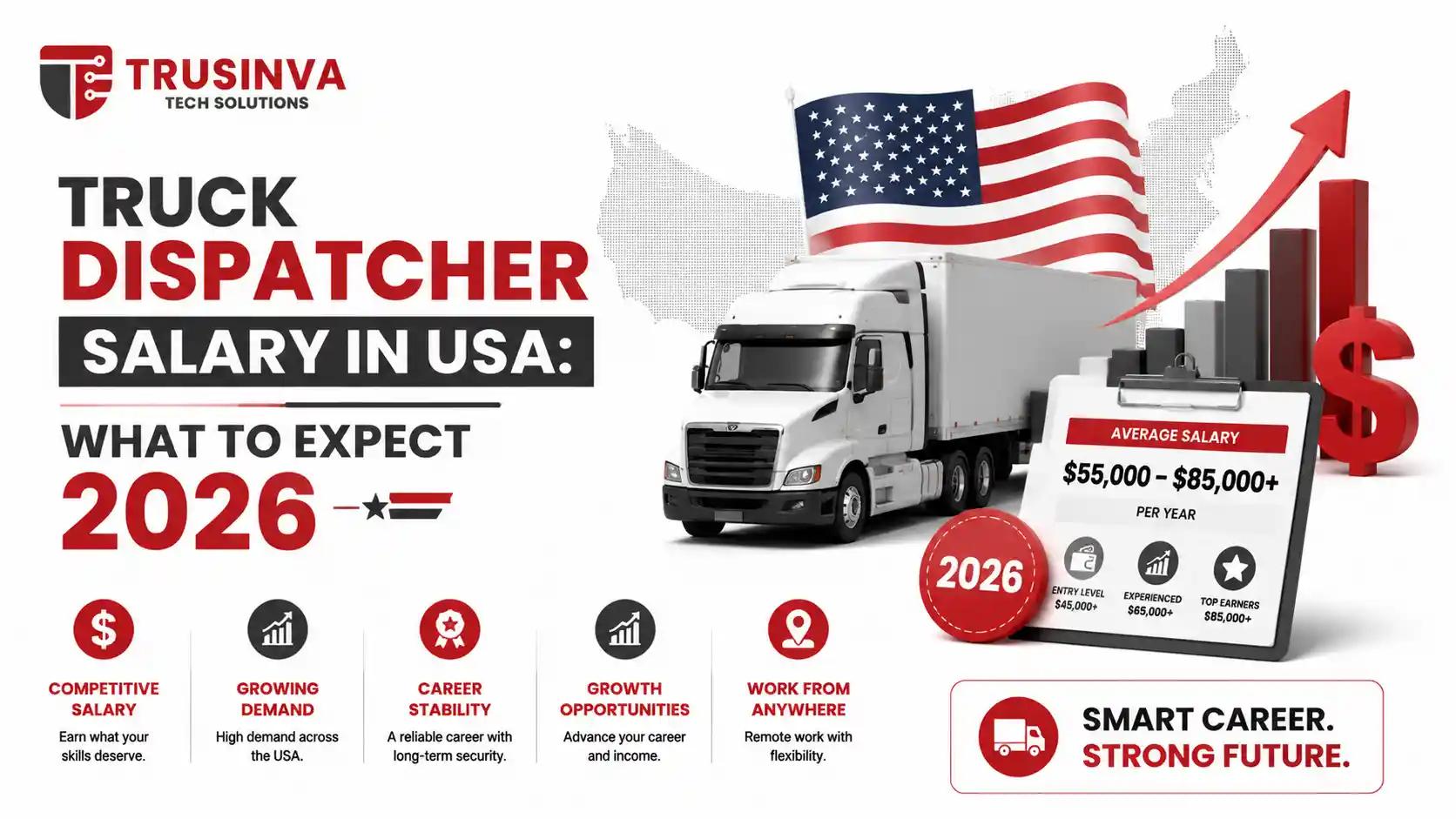
If you've been searching "truck dispatcher salary in USA," you're probably weighing a career move or trying to figure out if this industry is worth your time. Good question to ask, honestly.
Truck dispatching sits at the center of the entire freight industry. Every load that moves across the country depends on someone coordinating drivers, negotiating rates, and keeping shipments on track. That role pays surprisingly well when you know how the income structure actually works.
This guide breaks down real numbers, how pay varies by experience and setup, and what actually drives higher earnings in 2026. We'll also look at why more trucking companies are choosing to outsource truck dispatching services instead of hiring in-house.
What Is a Truck Dispatcher?
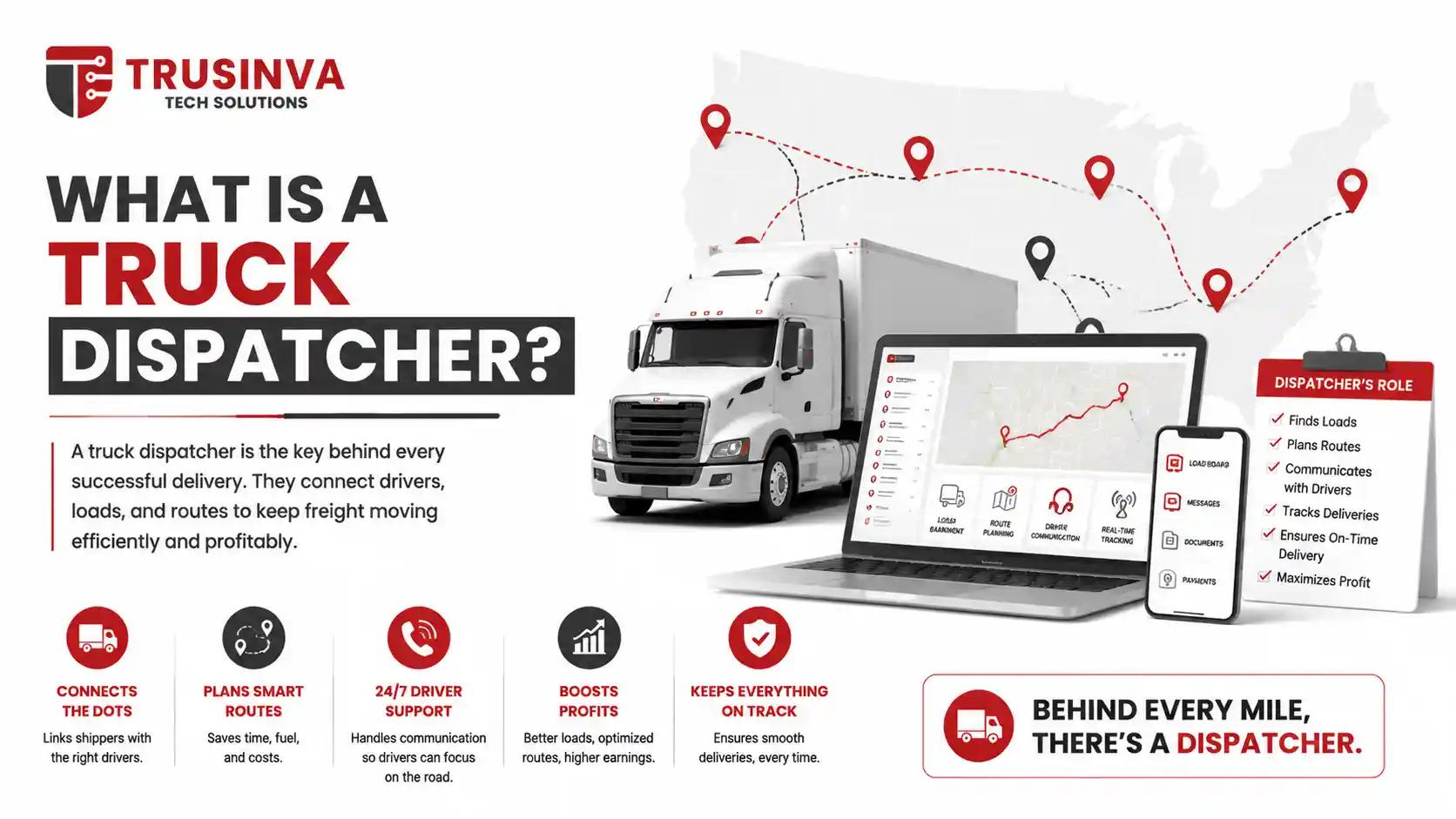
A truck dispatcher is the person who keeps trucks moving and making money. They find loads, negotiate freight rates, coordinate with brokers, track shipments, and handle the paperwork that comes with every haul.
Think of a dispatcher as the operations brain behind a driver or fleet. Drivers focus on the road. Dispatchers focus on keeping that truck loaded, on schedule, and profitable.
Some dispatchers work in-house for a single trucking company. Others run independent dispatch businesses and manage multiple owner-operators at once. Both paths lead to very different income potential, which we'll get into shortly.
Why Truck Dispatcher Salary Matters Right Now
The freight industry has gone through a lot of turbulence over the past few years — rate swings, driver shortages, and rising operating costs. Dispatchers have become more valuable, not less, because trucking companies need someone who can find profitable loads in a tighter market.
This matters whether you're in the U.S. building a dispatching career, or running a business overseas offering remote dispatch support to American carriers. Remote and international dispatching has grown fast because trucking companies want quality service without the overhead of a full-time in-house hire.
That's also why more owner-operators and small fleets are turning to truck dispatching services rather than hiring dispatchers directly — it's often more cost-effective and gives them access to trained professionals immediately.
How Much Does a Truck Dispatcher Make in the USA in 2026?
Here's the short answer people search for: truck dispatcher income in the USA typically ranges from entry-level hourly wages for company employees to commission-based earnings for independent dispatchers that can significantly exceed a traditional salary.
Pay depends heavily on the setup:
| Experience Level | Average Income |
| Beginner (in-house) | Entry-level hourly wage |
| Experienced (in-house) | Mid-to-upper hourly wage, sometimes salaried |
| Independent Dispatcher | Commission-based, typically 5–10% per load |
Independent dispatchers who manage multiple trucks tend to out-earn salaried dispatchers because their income scales with how many loads they book and how well they negotiate rates.
Average Truck Dispatcher Salary Based on Experience
Entry-level dispatchers usually start on the lower end while they learn load boards, rate negotiation, and carrier communication. Most beginners spend their first few months building relationships with brokers and getting comfortable with dispatch software.
Experienced dispatchers earn considerably more. After a couple of years, dispatchers understand freight lanes, seasonal rate patterns, and how to squeeze better numbers out of brokers. That experience translates directly into higher pay or a bigger cut if they work independently.
Independent or commission-based dispatchers have the highest ceiling. Since they're paid a percentage of each load booked, income grows as they take on more trucks. A dispatcher managing five or six owner-operators can out-earn a salaried dispatcher working for one company.
How Much Do Remote Truck Dispatchers Earn?
Remote dispatching has become one of the fastest-growing segments of this career. Many dispatchers now work entirely from home, coordinating loads for U.S. trucking companies from anywhere in the world.
Remote dispatcher income follows the same structure as in-house roles — hourly or salaried for company employees, commission-based for independent contractors. The advantage of remote work is lower overhead and the flexibility to manage multiple clients.
This is part of why international teams offering outsourced logistics and dispatching support have become such a strong business model. Trained remote dispatchers can offer U.S. carriers the same quality of service at a lower cost.
How Truck Dispatchers Get Paid
Understanding the pay structure matters just as much as the number itself.
Hourly or salaried pay applies to dispatchers working directly for a trucking company. It's predictable but capped.
Commission-based pay applies to independent dispatchers and dispatch services. They typically earn a percentage of the gross amount on each load — commonly somewhere in the 5–10% range, though this varies by relationship and volume.
Flat-fee arrangements are also common, where a dispatcher charges a fixed weekly rate per truck instead of a percentage.
Each model has trade-offs. Commission rewards performance but comes with income variability. Salary offers stability but limits upside.
Factors Affecting Truck Dispatcher Salary
A few things consistently move the needle on dispatcher earnings:
- Experience — knowing freight lanes and rate trends leads to better-negotiated loads
- Fleet size managed — more trucks under management means more potential income
- Location — dispatchers working with carriers in high-freight-volume states often see stronger demand
- Commission structure — percentage-based pay scales with performance
- Freight market conditions — tight capacity markets tend to push rates, and dispatcher earnings, higher
- Specialization — dispatchers who understand niche freight (reefer, flatbed, hotshot) can often command better terms
Step-by-Step: How to Become a Truck Dispatcher
- Learn the basics. Understand load boards, freight rates, dispatch software, and how carriers and brokers interact.
- Get trained. Structured training programs shorten the learning curve dramatically compared to figuring it out alone. A solid truck dispatching course covers rate negotiation, paperwork, and carrier communication from day one.
- Build carrier relationships. Whether you work in-house or independently, your network of trucking companies is your income source.
- Start small. Manage one or two trucks first to build confidence before scaling.
- Use the right tools. Dispatch software, TMS platforms, and CRM systems make managing multiple loads far more efficient.
- Scale up. As you gain experience, take on more clients or move into higher-paying in-house roles.
You don't need a CDL to become a dispatcher — this is one of the most searched questions, and the answer is no. Dispatching is a desk-based, logistics-focused role, not a driving job.
Common Mistakes Businesses and New Dispatchers Make
Underpricing dispatch services. New independent dispatchers often set commission rates too low just to land clients, which hurts long-term income.
Skipping proper training. Jumping straight into load boards without understanding rate negotiation leads to poor-paying loads and frustrated carrier relationships.
Ignoring software and automation. Manually tracking loads and paperwork wastes time that could go toward finding better freight.
Trucking companies handling dispatch in-house without the right systems. Many small fleets try to manage dispatching internally without dedicated staff, which leads to missed loads and inconsistent rates — a major reason so many now choose to outsource their dispatching entirely.
Why Choose Trusinva Tech Solutions
At Trusinva Tech Solutions, we work with trucking companies, owner-operators, and small fleets across the USA to provide professional dispatching support and business technology solutions that actually move the needle.
Our team helps carriers with:
- Truck Dispatching Services — load finding, rate negotiation, carrier communication, and 24/7 dispatch support
- Medical Billing Services — accurate, compliant billing support for healthcare providers
- Web Development — custom, high-performing websites built for conversions
- Mobile App Development — apps that give your business a competitive edge
- SEO Services — content and technical SEO strategies like the one powering this article
- Digital Marketing — full-funnel marketing that turns traffic into leads
- Software, ERP & CRM Solutions — systems that streamline your operations end to end
We also offer hands-on training through our truck dispatching course, along with programs in medical billing and taxation for the USA, UK, UAE, and KSA markets — built for people who want real, job-ready skills.
Want to see our work in action? Browse our projects, read more on our blog, or learn more about us.
Need Professional Truck Dispatching Support?
If you're a trucking company or owner-operator looking to increase revenue without the headache of managing dispatch in-house, we've got you covered. Our dispatch team handles:
- Load finding across major load boards
- Carrier and broker communication
- Rate negotiation to maximize every load
- Driver support and route coordination
- 24/7 dispatch assistance so trucks stay moving
Explore our full service list or get in touch to talk about your fleet's needs.
Frequently Asked Questions
How much does a truck dispatcher make in the USA? A truck dispatcher in the USA can earn anywhere from an entry-level hourly wage to strong commission-based income, depending on experience, fleet size, and whether they work independently or for a company.
Do truck dispatchers get commission? Yes. Many dispatchers, especially independent ones, earn a percentage of each load's gross rate rather than a fixed salary, which can significantly increase earnings as they take on more trucks.
Do I need a CDL to become a truck dispatcher? No. Dispatching is an office-based logistics role. You don't need a commercial driver's license to book loads, negotiate rates, or coordinate drivers.
Is truck dispatching a good career in 2026? Yes, especially with the rise of remote work and outsourced dispatching. Demand for skilled dispatchers remains strong as trucking companies look for ways to keep trucks loaded and profitable.
Can I work as a truck dispatcher from home? Absolutely. Remote dispatching has grown significantly, with many dispatchers managing loads for U.S. carriers from anywhere in the world using dispatch software and load boards.
How much does truck dispatching service cost for a trucking company? Costs vary by provider and structure, but most dispatch services charge a percentage of the load's gross rate or a flat weekly fee per truck, both of which are typically far cheaper than hiring an in-house dispatcher.
Final Thoughts
Truck dispatching offers real earning potential, especially for those willing to build strong carrier relationships and understand the freight market. Whether you're aiming for an in-house role or building an independent dispatch business, the income ceiling depends largely on your skill and hustle.
If you're a trucking company weighing whether to hire in-house or outsource, the math usually favors outsourcing — better rates, less overhead, and a team that already knows the industry.
Contact Trusinva Tech Solutions for professional digital services and business growth. Whether you need dispatching support, a new website, or a full digital marketing strategy, our team is ready to help you scale. Reach out today.