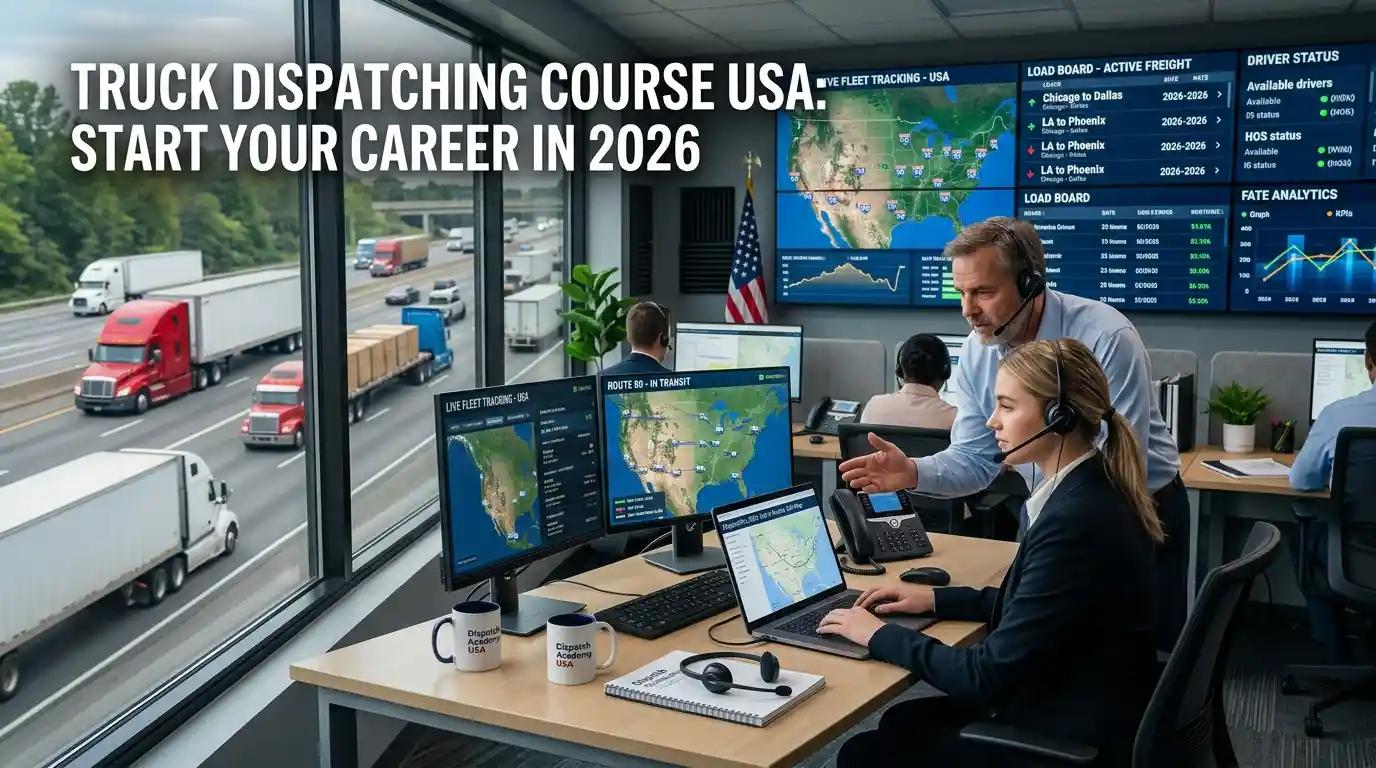
Introduction
The trucking industry is the backbone of the American economy. Every product you see on a store shelf was likely moved by a truck — and behind every truck is a dispatcher making it all happen.
If you're looking for a career that offers flexibility, good income, and the ability to work from home, a truck dispatching course might be exactly what you need. Whether you're a complete beginner or someone with a little logistics background, the right truck dispatcher training can open doors to a thriving career in the USA.
In 2026, the demand for skilled freight dispatchers is higher than ever. Thousands of owner-operators and trucking companies need reliable dispatchers to manage their loads, routes, and carrier relationships. This guide walks you through everything — from what truck dispatching is, to how you can get certified and start earning.
What Is Truck Dispatching?
Truck dispatching is the process of coordinating freight movement between shippers, carriers, and drivers. A truck dispatcher acts as the central point of communication — finding loads, negotiating rates, managing routes, and making sure deliveries happen on time.
In simple terms, if a trucking company needs to move cargo from Texas to New York, the dispatcher finds the load, negotiates the best rate, assigns the right driver, and tracks the shipment until delivery.
It's a role that combines communication, logistics knowledge, freight negotiation, and problem-solving — all from a desk or even a home office.
Truck dispatchers work with tools like load boards (DAT, Truckstop.com), truck dispatch software, and carrier management systems. They handle DOT compliance, route planning, and freight coordination on a daily basis.
Why a Truck Dispatching Career Makes Sense in 2026
The US freight industry moves over 10 billion tons of cargo every year. That's not slowing down anytime soon. In fact, with e-commerce growth and supply chain expansion, the need for qualified freight dispatchers is growing rapidly.
Here's why starting a truck dispatcher career in 2026 is a smart move:
- High demand nationwide — from California to Florida, New York to Texas, dispatcher jobs are available everywhere
- Work from home — most truck dispatchers operate remotely using cloud-based dispatch software
- Low barrier to entry — you don't need a college degree; a professional training program is enough
- Strong income potential — experienced dispatchers earn $45,000 to $75,000+ per year, or charge per load as independent dispatchers
- Scalability — you can start as a solo dispatcher and grow into a full truck dispatching business
For international students and professionals looking to build a US-based income stream, this career path is especially attractive.
Key Benefits of Taking a Truck Dispatching Course
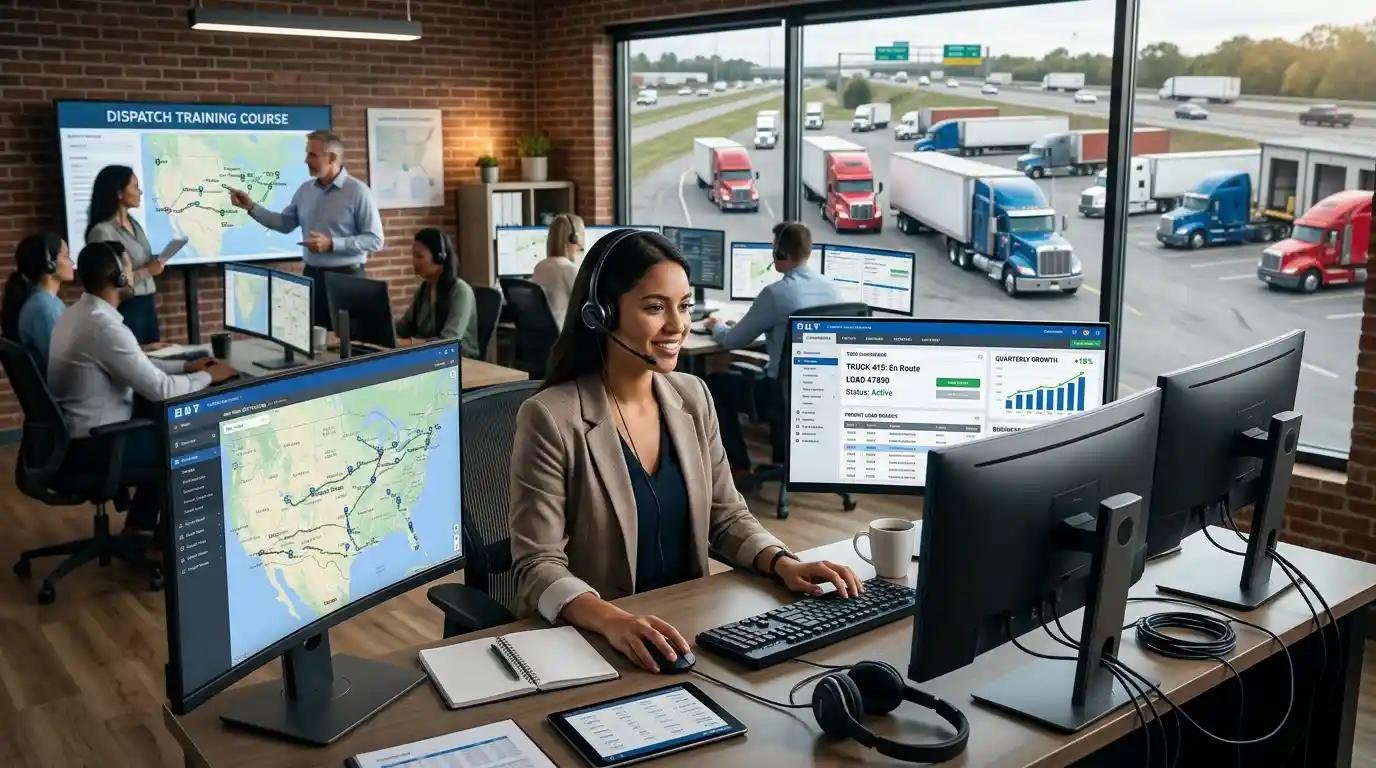
Enrolling in a structured freight dispatcher training program gives you a serious advantage over self-taught dispatchers. Here's what you gain:
- Industry knowledge from day one — learn load booking, carrier setup, rate negotiation, and freight management in weeks, not years
- Hands-on software training — get comfortable with real truck dispatch software used by actual companies
- Load board training — learn how to use DAT, Truckstop, and other platforms to find profitable loads
- DOT compliance understanding — avoid costly mistakes by knowing the rules from the start
- Dispatcher certification — a certificate adds credibility when applying for jobs or approaching carrier clients
- Business startup guidance — many courses teach you how to launch your own truck dispatching business from home
- Job placement support — some programs include truck dispatch training with job assistance
Whether you want a stable dispatcher job or to run your own dispatch operation, formal training gets you there faster.
How to Become a Truck Dispatcher in USA: Step-by-Step
Wondering how to become a truck dispatcher with no experience? Here's a clear, practical roadmap:
Step 1: Understand the Industry Start by learning the basics of trucking operations — how loads move, what owner-operators need, and how freight brokers and dispatchers differ. Read industry blogs, watch YouTube tutorials, and explore the freight industry landscape.
Step 2: Enroll in a Truck Dispatching Course Choose a reliable online truck dispatching course that covers load booking, carrier relations, dispatch workflow, freight negotiation, and software training. Look for programs that offer a certificate upon completion.
You can explore the Truck Dispatching Course by Trusinva Tech Solutions — a comprehensive, beginner-friendly program built for the US market.
Step 3: Learn the Tools Get hands-on with trucking dispatch software. Platforms like TruckingOffice, Axele, and ProTransport are widely used. Most good training programs include software walkthroughs as part of the curriculum.
Step 4: Complete Your Certification Finish your course and earn your truck dispatcher certification. While not legally required in most states, certification dramatically improves your employability and business credibility.
Step 5: Build Your Carrier Network Start reaching out to owner-operators and small trucking companies. Offer your dispatching services, and build your carrier relations one client at a time.
Step 6: Use Load Boards to Book Freight Sign up for DAT or Truckstop.com, learn how to search and negotiate loads, and start booking freight for your carriers. This is where your load board training pays off.
Step 7: Launch or Apply Once confident, either apply for remote truck dispatcher jobs or officially launch your own dispatch business. Many successful dispatchers start from home with just a laptop and an internet connection.
What Does a Truck Dispatcher Do? (Daily Responsibilities)
Understanding the job helps you prepare better. Here's what a typical dispatcher handles daily:
- Searching load boards for available freight
- Contacting brokers and shippers to negotiate freight rates
- Assigning loads to available drivers
- Tracking shipments in real time using dispatch software
- Handling paperwork and rate confirmations
- Communicating with drivers about routes, pickup times, and delivery windows
- Ensuring DOT compliance and proper documentation
- Resolving delivery issues or delays quickly
It's a fast-paced role that rewards organized, communicative people who can think on their feet.
Truck Dispatcher Salary in USA 2026
One of the most searched questions is: how much do truck dispatchers make?
Here's a realistic breakdown:
- Entry-level dispatcher: $35,000 – $45,000/year
- Experienced dispatcher (employed): $50,000 – $70,000/year
- Independent dispatcher (per load fee): $150 – $500+ per load, depending on freight type
- Dispatch business owner: $5,000 – $20,000+/month (with multiple carriers)
Independent dispatchers typically charge 5–10% of the gross load rate. If you're dispatching for 5 trucks running weekly, the income adds up quickly.
Location also affects earnings. Dispatchers in Texas, California, Florida, and New York tend to earn more due to higher freight volumes.
Common Mistakes to Avoid in Truck Dispatching
Many beginners make avoidable mistakes that cost them time, money, and clients. Watch out for these:
1. Not verifying carrier credentials Always check a carrier's MC number, insurance, and safety rating before booking loads. Skipping this step leads to compliance issues and lost clients.
2. Poor rate negotiation New dispatchers often accept the first rate offered. Learn freight negotiation skills so you can maximize earnings for your carriers — and your own commissions.
3. Ignoring dispatch software Trying to manage everything manually is a recipe for errors. Use proper trucking dispatch software from the start to stay organized.
4. Neglecting contracts Always have a dispatcher-carrier agreement in place. Operating without contracts leads to payment disputes.
5. Underestimating communication Dispatching is 70% communication. If you're not responsive and clear with drivers and brokers, loads fall apart. Build a habit of proactive updates.
6. Skipping formal training Many people try to "figure it out" through YouTube videos. While helpful, nothing replaces a structured freight dispatcher course that teaches the full dispatch workflow from A to Z.
How to Start a Truck Dispatching Business from Home

Starting your own dispatch business is more achievable than most people realize. Here's a basic startup checklist:
- Complete a truck dispatching course and get certified
- Register your business (LLC is recommended in the USA)
- Get a business bank account and set up invoicing
- Create a professional website and social media presence
- Sign up for load board access (DAT, Truckstop, etc.)
- Prepare dispatcher-carrier service agreements
- Start outreach to owner-operators needing dispatch support
You don't need a physical office. Many successful dispatch business owners run their entire operation from home with minimal startup costs.
Why Choose Trusinva Tech Solutions for Your Truck Dispatching Course
Trusinva Tech Solutions is a professional digital services agency offering industry-focused training and technology solutions for clients across the USA and beyond.
Their Truck Dispatching Course is designed specifically for beginners who want to enter the US freight industry quickly and confidently. Here's what makes it stand out:
- Practical, USA-focused curriculum covering load boards, dispatch software, freight negotiation, and carrier management
- Beginner-friendly delivery — no prior experience needed
- Online format — learn from anywhere, at your own pace
- Certificate upon completion — recognized and useful for job applications and client pitches
- Affordable pricing compared to many US-based programs
- Expert instructors with real-world trucking and logistics experience
Beyond dispatching, Trusinva Tech Solutions offers a complete range of digital services. If you're building a dispatch business and need a professional website, their Web Development team has you covered. Need to get clients finding you online? Their SEO Services and Digital Marketing solutions are built for business growth.
They also offer courses in adjacent fields like Medical Billing and USA Taxation — making them a one-stop destination for professionals building US-market careers.
For dispatch business owners who want to scale, Trusinva's CRM Development and Mobile App Development services help automate operations and manage clients more efficiently.
Visit their Services page or Projects portfolio to see how they've helped businesses grow across industries.
Real-World Example: From Beginner to Dispatch Business Owner
Consider someone like Ahmed — a 27-year-old from Islamabad who wanted to build a remote income working with US clients. He had no trucking background, but he enrolled in an online truck dispatching course, spent six weeks learning load booking, freight negotiation, and dispatch software, and earned his certificate.
Within three months of finishing the course, Ahmed had signed contracts with two owner-operators in Texas, was booking 4–6 loads per week per truck, and earning a 7% commission per load. By month six, he had five active carrier clients and had officially launched his own dispatch business.
His startup cost? Under $500. His monthly income? Over $4,000.
This is not an isolated story. Thousands of people — from the USA, Pakistan, Philippines, and beyond — have built profitable dispatch careers through the right training and consistent effort.
Frequently Asked Questions
What does a truck dispatcher do? A truck dispatcher coordinates freight movement between shippers, brokers, and drivers. They find loads, negotiate rates, manage routes, track shipments, and handle communication throughout the delivery process.
Do truck dispatchers need a license or certification? No federal license is required to be a truck dispatcher in the USA. However, completing a certified training program significantly improves your credibility, job prospects, and business success.
How long does truck dispatcher training take? Most quality online truck dispatching courses take between 4 and 8 weeks to complete. Some self-paced programs can be finished faster depending on your availability.
Can I learn truck dispatching from home? Absolutely. Truck dispatching is one of the best work-from-home careers available. Most dispatchers operate entirely remotely using a computer, phone, and dispatch software.
Is truck dispatching a good career in 2026? Yes. The freight industry continues to grow, and the demand for skilled dispatchers — both employed and independent — remains strong across the USA. It's also scalable into a full business.
How much does a truck dispatching course cost? Costs vary by provider. Basic online courses start at $200–$500, while more comprehensive programs with certification and business training can range from $500 to $1,500. Trusinva Tech Solutions offers competitive pricing for their Truck Dispatching Course.
What software do truck dispatchers use? Common tools include DAT load boards, Truckstop.com, TruckingOffice, Axele, and ProTransport. Good training programs include hands-on practice with these platforms.
Conclusion + Call to Action
Truck dispatching is one of the most accessible, profitable, and flexible career paths available in the USA today. Whether you want a remote job with a trucking company or to build your own dispatch business from home, the path starts with the right training.
With a structured truck dispatching course, you'll gain the skills, tools, and confidence to enter the freight industry quickly — even with zero prior experience.
Trusinva Tech Solutions is ready to help you get there. Their Truck Dispatching Course is designed for beginners, built for the US market, and focused on real results.
Beyond training, if you need a website for your dispatch business, digital marketing support, or any custom software solution, their full-service team is here for you. Explore their complete services or get in touch today to take the next step.
Your dispatching career starts with one decision. Make it today.