Running a truck as an owner-operator means you're the driver, accountant, negotiator, and back office — all at once. Between searching load boards, calling brokers, and chasing rate confirmations, many owner-operators spend more time hunting freight than hauling it.
That's exactly where a professional owner operator dispatch service changes the game. Dispatch services for owner operators handle load booking, broker negotiation, route planning, and paperwork management, so you can focus on driving and earning.
In this guide, we'll break down how truck dispatch services work, why they matter in 2026, the real benefits for your trucking business, and how to choose the best dispatch service for owner operators in the USA.
What Are Truck Dispatch Services?
A truck dispatch service is a company (or dedicated dispatcher) that finds and books loads on behalf of owner-operators and small trucking companies. Instead of scanning the DAT Load Board or Truckstop for hours, your dispatcher does it for you — and usually does it better.
A professional freight dispatch service typically handles:
- Load booking — finding high-paying freight that matches your truck type (dry van, reefer, flatbed, hotshot, or box truck)
- Broker negotiation — pushing back on lowball rates and securing detention pay and layover pay
- Route planning and optimization — reducing deadhead miles and fuel costs
- Paperwork management — carrier packets, rate confirmations, invoices, and compliance documents
- Back-office support — so your trucking administration doesn't eat your weekends
One important distinction: a truck dispatcher works for you, the carrier. A freight broker works for the shipper. That's the core difference in the truck dispatch vs freight broker debate — a dispatcher's job is to maximize your revenue per mile, not the shipper's savings.
Why Dispatch Services Matter for Owner-Operators in 2026
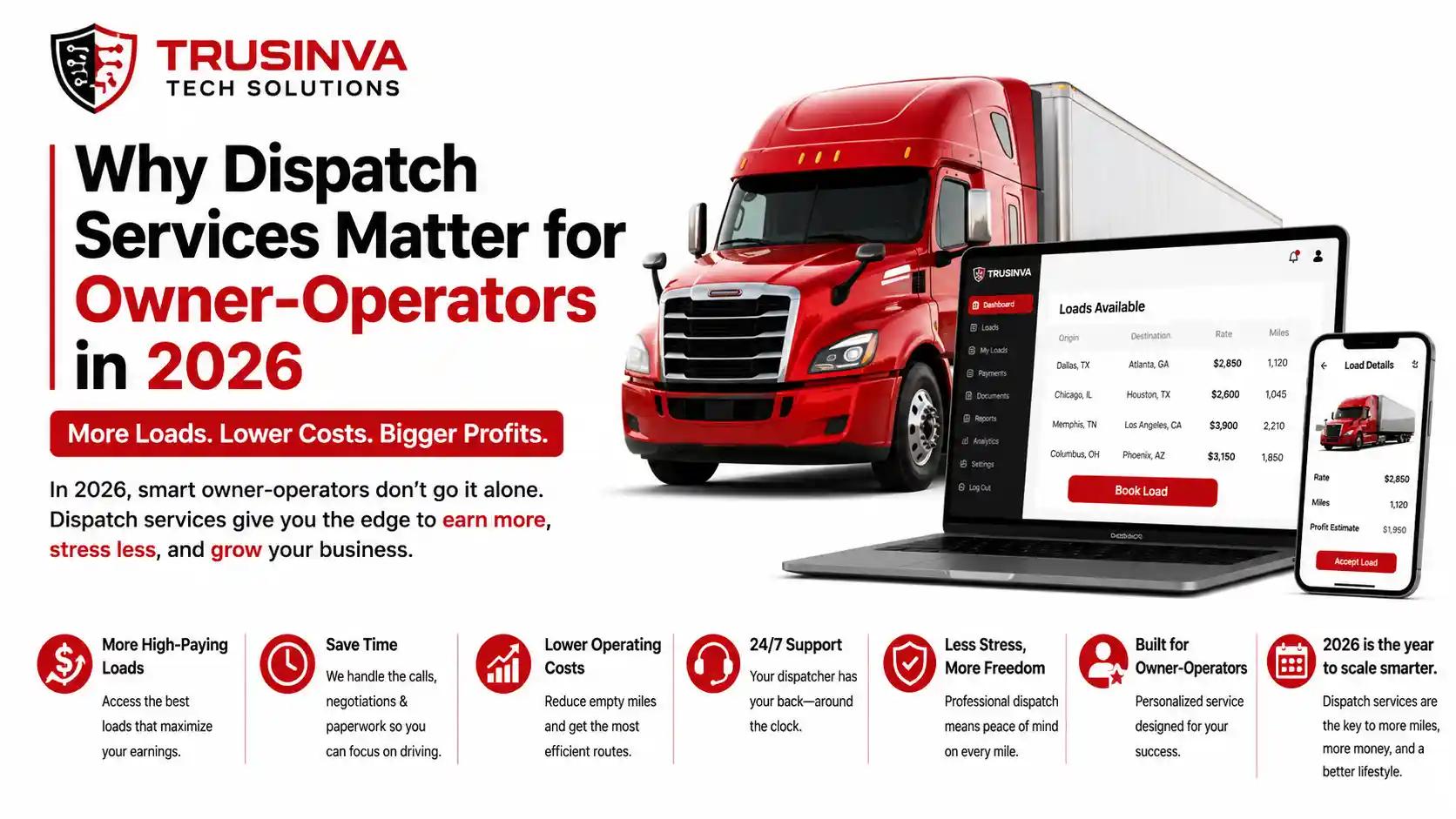
The trucking industry in the USA is more competitive than ever. Freight rates fluctuate weekly, brokers negotiate aggressively, and compliance requirements from the FMCSA keep tightening. According to industry data from DAT Freight & Analytics, spot market rates can swing significantly by lane and season — and owner-operators without market intelligence often accept rates 10–20% below what the lane actually pays.
Here's the reality for a solo owner-operator doing everything alone:
- You lose driving hours (and revenue) searching load boards.
- You negotiate blind, without knowing current lane rates.
- You accept freight that leaves you deadheading hundreds of miles home.
- Paperwork errors delay payments and create DOT compliance risks.
A dedicated truck dispatcher solves all four problems at once. And this isn't just a US conversation — trucking entrepreneurs from Pakistan, the UAE, and across South Asia are also entering the US dispatch industry as remote dispatchers and dispatch business owners, making this one of the fastest-growing cross-border service niches in logistics.
Key Benefits of Hiring a Professional Truck Dispatcher
Here's what a quality dispatch service actually delivers to your bottom line:
- Better freight rates — Experienced dispatchers know lane rates and negotiate with brokers daily. Even a $0.15/mile improvement adds thousands of dollars per year.
- Reduced deadhead miles — Smart load planning means your truck earns in both directions, directly improving fuel cost optimization.
- More driving time, more revenue — You stop losing 2–3 hours a day on load boards and broker calls.
- Paperwork handled — Rate confirmations, carrier packets, invoicing, and trucking paperwork management are done for you.
- Compliance support — Help staying aligned with DOT compliance and FMCSA regulations.
- Consistent freight — No forced dispatch (with reputable companies), but a steady pipeline of pre-vetted loads.
- Scalability — When you're ready to add a second or third truck, your dispatch and back-office systems are already in place.
Real example: An owner-operator running a dry van from Texas books loads himself at an average of $2.10/mile with 18% deadhead. After hiring a dedicated dispatcher, his average climbs to $2.35/mile with 9% deadhead. On 10,000 miles a month, that's roughly $2,500+ in additional monthly revenue — far more than the typical dispatch fee of 5–10% per load.
How Dispatch Services Work: Step-by-Step Process
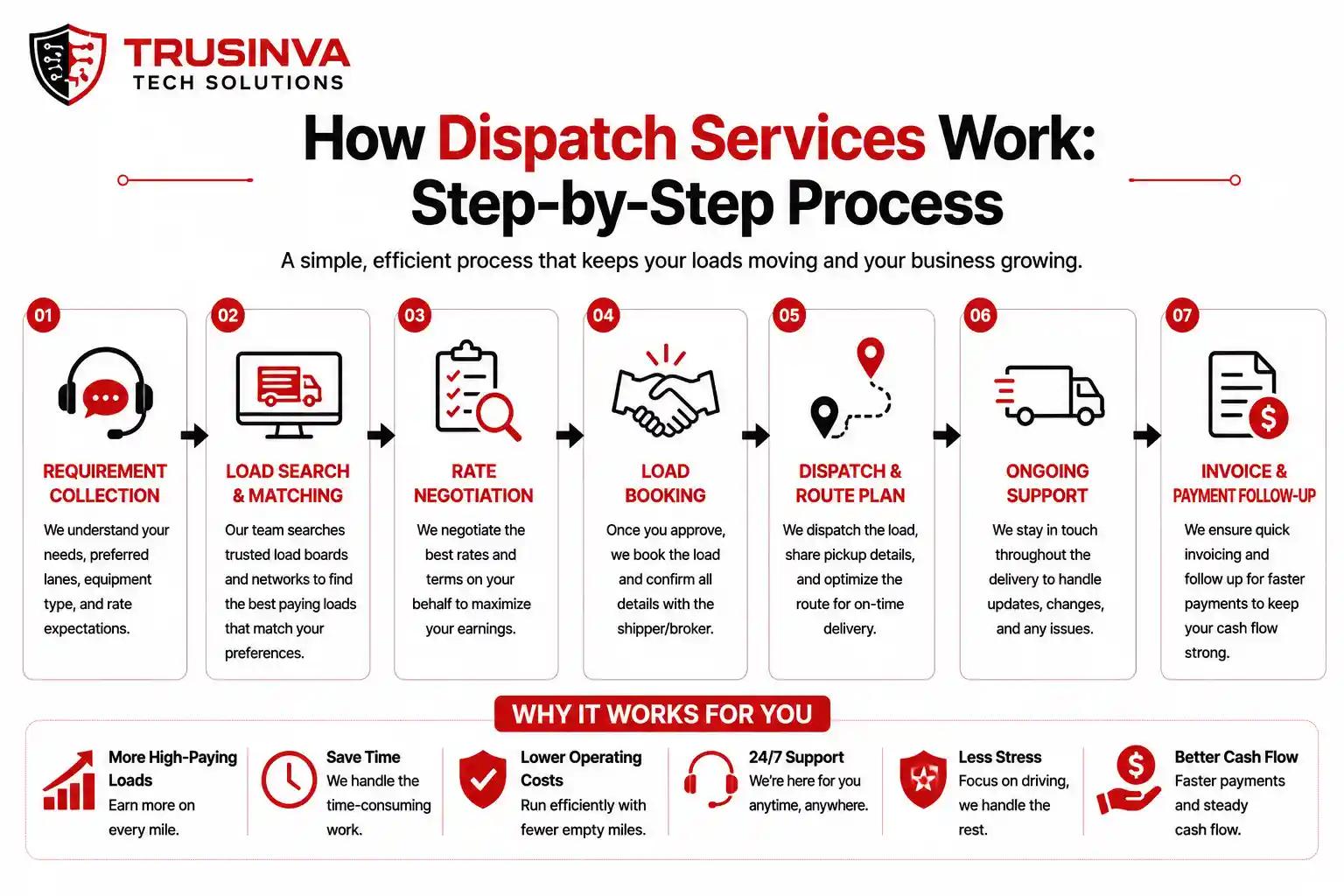
Wondering how truck dispatch works in practice? Here's the typical workflow:
- Onboarding — You share your MC authority, insurance, W-9, truck/trailer details, and preferred lanes. The dispatch company sets up your carrier profile.
- Load searching — Your dispatcher monitors load boards (DAT, Truckstop) and direct broker relationships to find freight matching your equipment and lanes.
- Rate negotiation — Before anything is booked, the dispatcher negotiates the rate, fuel surcharge, detention pay, and layover terms with the broker.
- Your approval — With a no forced dispatch model, you approve every load. Nothing is booked without your yes.
- Paperwork & setup — The dispatcher completes the carrier packet, gets the rate confirmation, and sends you pickup details.
- In-transit support — Check calls, broker updates, and problem-solving (breakdowns, delays, detention claims) are handled for you.
- Invoicing & records — Delivery documents are collected and invoices submitted, keeping your cash flow moving.
The result: you drive, deliver, and get paid — while the dispatch service runs your trucking back office.
Common Mistakes Owner-Operators Make With Dispatching
Even experienced carriers get burned by these:
1. Choosing on price alone. The cheapest dispatch service often means an overloaded dispatcher juggling 30 trucks. A slightly higher fee with a dedicated truck dispatcher usually pays for itself in better rates.
2. Signing forced-dispatch contracts. Reputable owner operator dispatch services never force you to take loads. If a contract removes your right to refuse freight, walk away.
3. Ignoring lane strategy. Booking one great-paying load into a dead freight market means an expensive deadhead home. Good dispatchers plan round trips, not single loads.
4. Skipping the paperwork review. Always confirm the rate confirmation matches what was negotiated — before pickup, not after delivery.
5. Not tracking cost per mile. If you don't know your operating cost per mile, you can't judge whether any load — or any dispatch fee — is actually profitable.
6. Assuming all dispatchers know your equipment. A dispatcher who's excellent with dry van freight may not know reefer or hotshot markets. Match the service to your truck type.
Why Choose Trusinva Tech Solutions
At Trusinva Tech Solutions, we work at the intersection of trucking, technology, and business growth — which is exactly what modern owner-operators need in 2026.
For carriers and dispatch entrepreneurs: Our professional truck dispatching course trains you (or your team) in load booking, broker negotiation, rate analysis, and dispatch operations — whether you want to dispatch your own truck, work from home as a dispatcher, or launch a full truck dispatching business.
For trucking businesses ready to modernize: Dispatch in 2026 is increasingly digital. We build the technology that powers modern logistics operations, including CRM development for lead and carrier management, custom web development and mobile app development for dispatch platforms, and full software, ERP, and automation solutions for trucking back offices.
For visibility and growth: Your dispatch or trucking company can't win clients it can't reach. Our SEO services and digital marketing team helps trucking and logistics brands rank on Google and generate consistent leads.
We also offer professional training in medical billing and international taxation — including USA taxation, UK taxation, UAE taxation, and KSA taxation — making us a one-stop partner for outsourcing-ready professionals and growing businesses alike. Explore our full course catalog, browse recent projects, or learn more about our team.
Frequently Asked Questions
What does a truck dispatcher do? A truck dispatcher finds and books loads for owner-operators, negotiates rates with freight brokers, plans routes, handles carrier packets and rate confirmations, and manages back-office paperwork — allowing drivers to focus on hauling freight.
How much do dispatch services cost? Most truck dispatch services charge 5–10% of the gross load revenue, or a flat weekly fee ($200–$500 depending on the service level). A good dispatcher typically earns back their fee through better rates and reduced deadhead miles.
Is hiring a truck dispatcher worth it for owner-operators? Yes, in most cases. If a dispatcher improves your rate per mile and cuts your empty miles, the added revenue usually exceeds the dispatch fee — while also saving you 10–15 hours a week of load searching and paperwork.
Can dispatchers negotiate better freight rates? Absolutely. Professional dispatchers negotiate with brokers daily, know current lane rates from tools like DAT, and routinely secure higher line-haul rates plus detention and layover pay that solo drivers often miss.
What is "no forced dispatch"? No forced dispatch means the owner-operator always has the final say. The dispatcher presents loads and negotiates terms, but nothing is booked without your approval — a must-have policy with any reputable dispatch company.
Are dispatch services tax deductible? Dispatch fees are generally a legitimate business expense for owner-operators in the USA. Confirm the specifics with your tax professional to ensure proper documentation and deduction.
Conclusion: Drive More, Stress Less, Earn Better
For owner-operators in 2026, professional dispatch services aren't a luxury — they're a profit strategy. Better freight rates, fewer deadhead miles, handled paperwork, and DOT/FMCSA compliance support all add up to a healthier trucking business and a healthier work-life balance behind the wheel.
Whether you want a reliable dispatch partner, professional dispatcher training, or the technology and marketing to grow your logistics brand — contact Trusinva Tech Solutions for professional digital services and business growth. Visit our blog for more trucking business tips, or get in touch today for a free consultation.