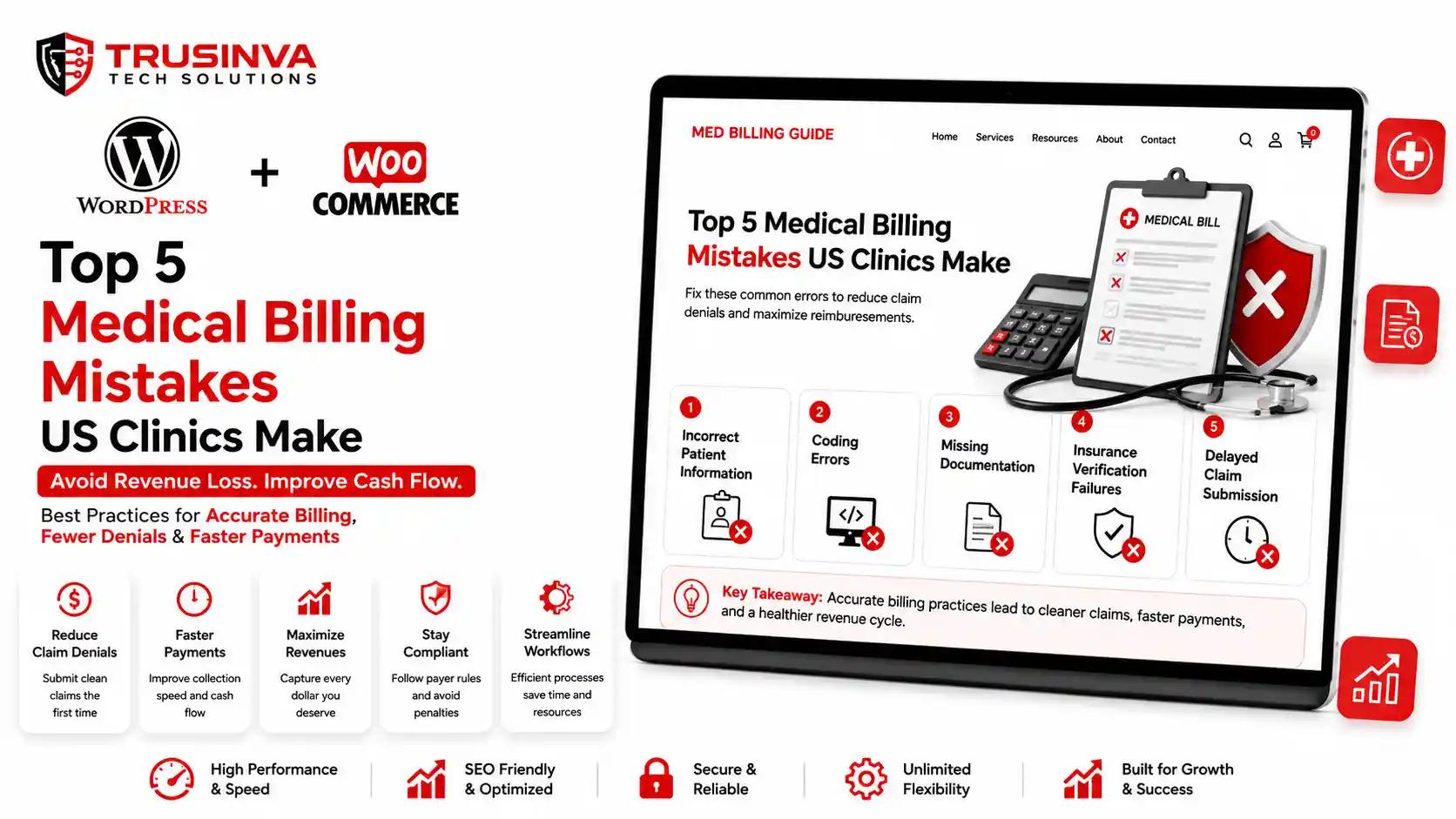
Thousands of insurance claims are rejected every day—but the real reason might surprise you. It's often not the insurance company, but simple billing mistakes made inside the clinic. Are you making one of these costly errors?
If you run a clinic, private practice, or medical office in the US, you already know the pain: claims get denied, payments get delayed, and revenue slips through the cracks — often without anyone noticing until it's too late.
Medical billing mistakes cost US healthcare providers billions every year. Small errors in coding, documentation, or claim submission can lead to denied claims, delayed reimbursements, and frustrated patients.
In this guide, we'll break down the top 5 medical billing mistakes US clinics make, why they happen, and practical steps you can take to fix them — so your clinic gets paid faster and more accurately.
What Is Medical Billing?
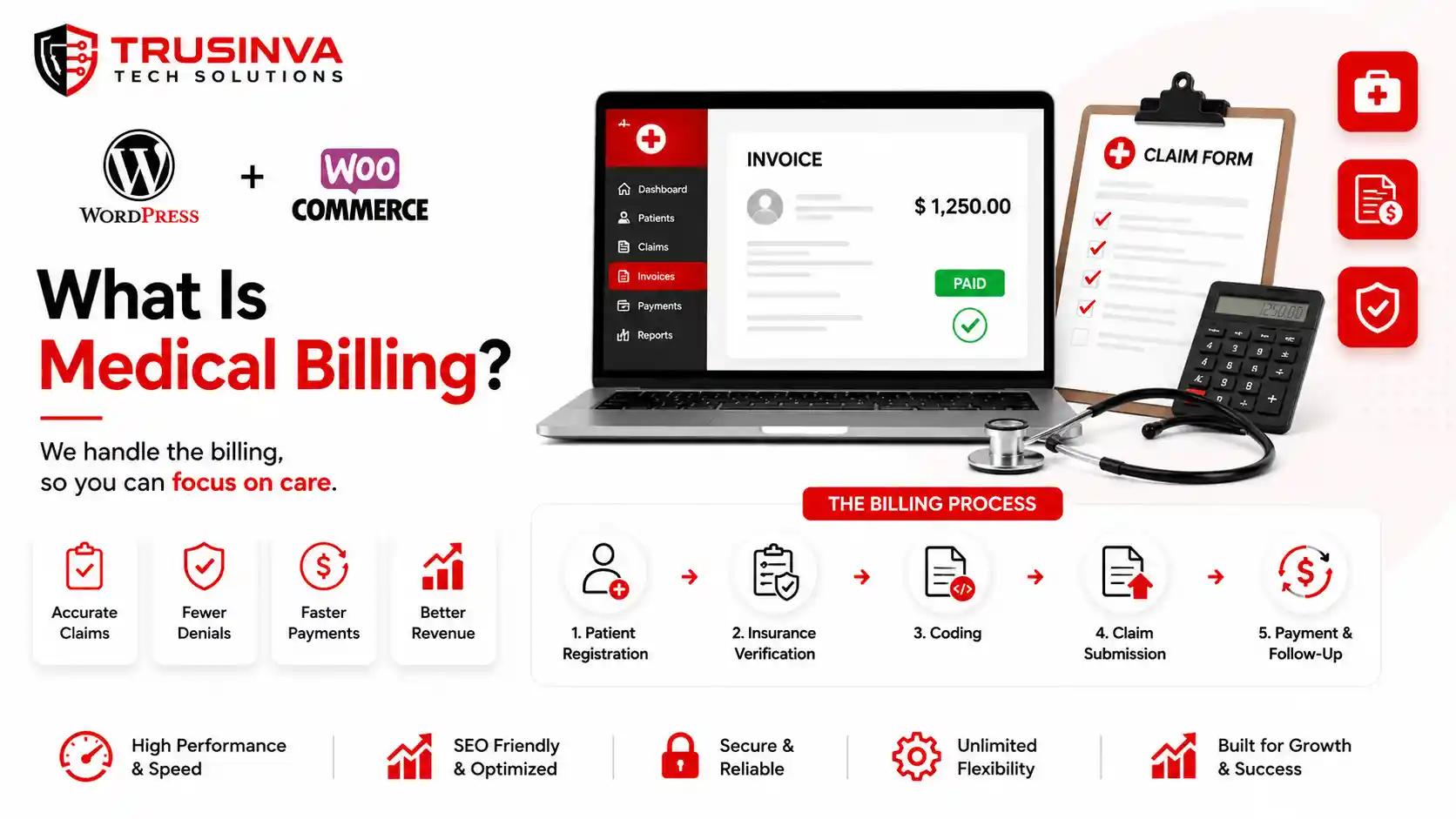
Medical billing is the process of translating a patient visit into a claim, submitting it to an insurance company, and following up until payment is received.
It involves several stages: patient eligibility verification, medical coding, claim submission, payment posting, and denial management. Together, these steps form what's known as the revenue cycle.
A "clean claim" is a claim submitted without errors — meaning it gets approved and paid the first time, without needing correction or resubmission. The goal of every clinic should be to maximize clean claims and minimize denials.
Why Medical Billing Accuracy Matters
Billing accuracy isn't just an administrative detail — it directly affects your clinic's cash flow, patient trust, and compliance standing.
For clinics across the US — whether in California, Texas, Florida, New York, or Illinois — even a small increase in claim denials can mean thousands of dollars in delayed or lost revenue every month.
For international healthcare providers and outsourcing partners, billing accuracy also matters because more clinics are now turning to outsourced medical billing companies to reduce administrative burden and improve collections.
Here's the reality: insurance companies deny a significant share of claims on the first submission, and most denials come down to preventable errors — not medical complexity.
Key Benefits of Getting Medical Billing Right
When a clinic tightens up its billing process, the results show up quickly:
- Faster reimbursements — clean claims get paid in days, not months
- Higher revenue — fewer denied or written-off claims means more money collected
- Better patient experience — accurate billing means fewer confusing statements and billing disputes
- Reduced compliance risk — proper documentation protects against audits and penalties
- More predictable cash flow — practices can plan staffing, equipment, and growth with confidence
- Stronger AR management — accounts receivable stay current instead of aging past 90 days
Now let's look at where things typically go wrong.
The Top 5 Medical Billing Mistakes US Clinics Make
Mistake #1: Incorrect or Outdated Medical Coding
CPT and ICD-10 coding errors are one of the most common reasons claims get rejected. Codes change every year, and using an outdated or mismatched code — even by one digit — can trigger an automatic denial.
Example: A clinic bills a procedure using a CPT code that doesn't match the diagnosis code on file. The insurer flags it as "not medically necessary" and rejects the claim outright.
The fix: Regular coding audits, ongoing staff training, and coding software that flags mismatches before submission.
Mistake #2: Poor Patient Eligibility Verification
Many clinics skip or rush eligibility verification, assuming a patient's insurance is still active or covers the service. This is one of the fastest ways to end up with an unpaid claim.
Example: A patient's insurance plan changed mid-year, but the front desk never re-verified coverage. The claim is denied for "no active coverage," and now the clinic has to bill the patient directly — often leading to collection issues.
The fix: Verify eligibility before every visit, not just at intake. Automated eligibility verification tools can do this in seconds.
Mistake #3: Incomplete or Inaccurate Documentation
Insurance companies require clear, specific clinical documentation to support every billed service. Vague notes or missing details are a leading cause of claim denials.
Example: A physician documents "patient seen for pain" without specifying location, severity, or treatment plan. The payer denies the claim, citing insufficient documentation to justify the billed code.
The fix: Standardize documentation templates and train providers on what payers require for each code they commonly bill.
Mistake #4: Late or Missed Claim Submission Deadlines
Every payer has a filing deadline — often 90 to 180 days from the date of service. Miss it, and the claim is denied permanently, regardless of how valid it is.
Example: A busy front office falls behind on claims during a staffing shortage. Weeks later, a batch of claims bounces back as "timely filing limit exceeded" — and that revenue is gone for good.
The fix: Set up automated claim submission workflows with deadline tracking, so nothing slips through the cracks.
Mistake #5: Ignoring Denial Management and Follow-Up
Many clinics submit a claim, get denied, and simply write it off instead of appealing. Over time, this "revenue leakage" adds up to a significant loss.
Example: A clinic receives dozens of denials monthly but only has time to work a fraction of them. The rest sit untouched until they pass the appeal deadline.
The fix: Build (or outsource) a dedicated denial management process that tracks, appeals, and resolves rejected claims quickly.
Step-by-Step Process to Reduce Medical Billing Errors
Here's a practical framework any clinic can follow:
- Verify patient eligibility before every appointment, not just at first visit
- Confirm coding accuracy using updated CPT and ICD-10 code sets
- Review documentation for completeness before claims go out
- Submit claims electronically for faster processing and fewer manual errors
- Track claim status regularly instead of waiting for denial notices
- Appeal denials promptly within payer deadlines
- Run monthly billing audits to catch patterns before they become costly habits
- Review AR aging reports to catch claims stuck past 30-60-90 days
Following this process consistently is what separates high-performing clinics from those constantly chasing unpaid claims.
Common Mistakes Beyond the Top 5
A few additional issues worth watching for:
- Duplicate billing for the same service
- Upcoding or undercoding procedures
- Failing to obtain prior authorization when required
- Not reconciling payment postings against expected reimbursement
- Relying on outdated billing software that isn't HIPAA compliant
Each of these, on its own, seems minor. Together, they quietly drain revenue month after month.
How Professional Medical Billing Services Help
This is exactly why many clinics — from solo family practices to multi-provider groups — choose to outsource their billing instead of managing it in-house.
A dedicated medical billing partner brings coding expertise, denial management systems, and HIPAA-compliant workflows that most in-house teams don't have the bandwidth to maintain.
The result: fewer denials, faster reimbursements, and staff who can focus on patient care instead of chasing insurance companies.
Why Choose Trusinva Tech Solutions
At Trusinva Tech Solutions, we help US clinics, private practices, and healthcare providers streamline their revenue cycle with accurate, HIPAA-compliant medical billing support — combined with the technology to back it up.
Our team specializes in reducing claim denials, speeding up reimbursements, and giving clinics full visibility into their billing performance.
Beyond billing, we offer a full suite of services designed to help healthcare businesses grow, including:
- Medical billing support and training for accurate, compliant claims
- Web Development for clinics that need a professional, patient-friendly website
- Mobile App Development for patient portals and appointment booking
- SEO Services to help your practice get found by local patients
- Digital Marketing to bring in a steady stream of new patients
- CRM Development and ERP solutions to manage patient relationships and operations
- Truck Dispatching training and support for logistics businesses looking to diversify
We also offer specialized training programs, including our medical billing course, for professionals who want to build a career in this growing field.
Want to see our work in action? Check out our past projects or read more on our blog for practical business and healthcare technology insights.
Frequently Asked Questions
What are the most common medical billing mistakes? The most common mistakes are incorrect coding, poor eligibility verification, incomplete documentation, missed filing deadlines, and lack of denial follow-up.
Why do insurance claims get denied? Claims typically get denied due to coding errors, missing information, expired coverage, missed deadlines, or lack of prior authorization.
How can clinics reduce billing errors? Clinics can reduce errors by verifying eligibility before every visit, keeping coding updated, standardizing documentation, and using reliable billing software or outsourced billing services.
What is claim denial management? Claim denial management is the process of tracking, investigating, and appealing rejected insurance claims to recover revenue that would otherwise be lost.
Can outsourced medical billing reduce claim denials? Yes. Outsourced billing teams typically have specialized coding knowledge and dedicated denial management processes, which often results in fewer denials and faster payments than in-house handling alone.
How often should clinics perform billing audits? Most clinics benefit from monthly or quarterly billing audits to catch coding errors, documentation gaps, and denial patterns before they become costly.
Final Thoughts
Medical billing mistakes are common — but they're also preventable. By tightening up coding accuracy, eligibility verification, documentation, and denial follow-up, clinics can significantly improve their revenue cycle and reduce lost income.
If your clinic is struggling with claim denials or delayed reimbursements, you don't have to fix it alone.
Contact Trusinva Tech Solutions for professional digital services and business growth — from medical billing support to web development, SEO, and beyond. Learn more about our full range of services or read our about page to see how we can help your clinic thrive.