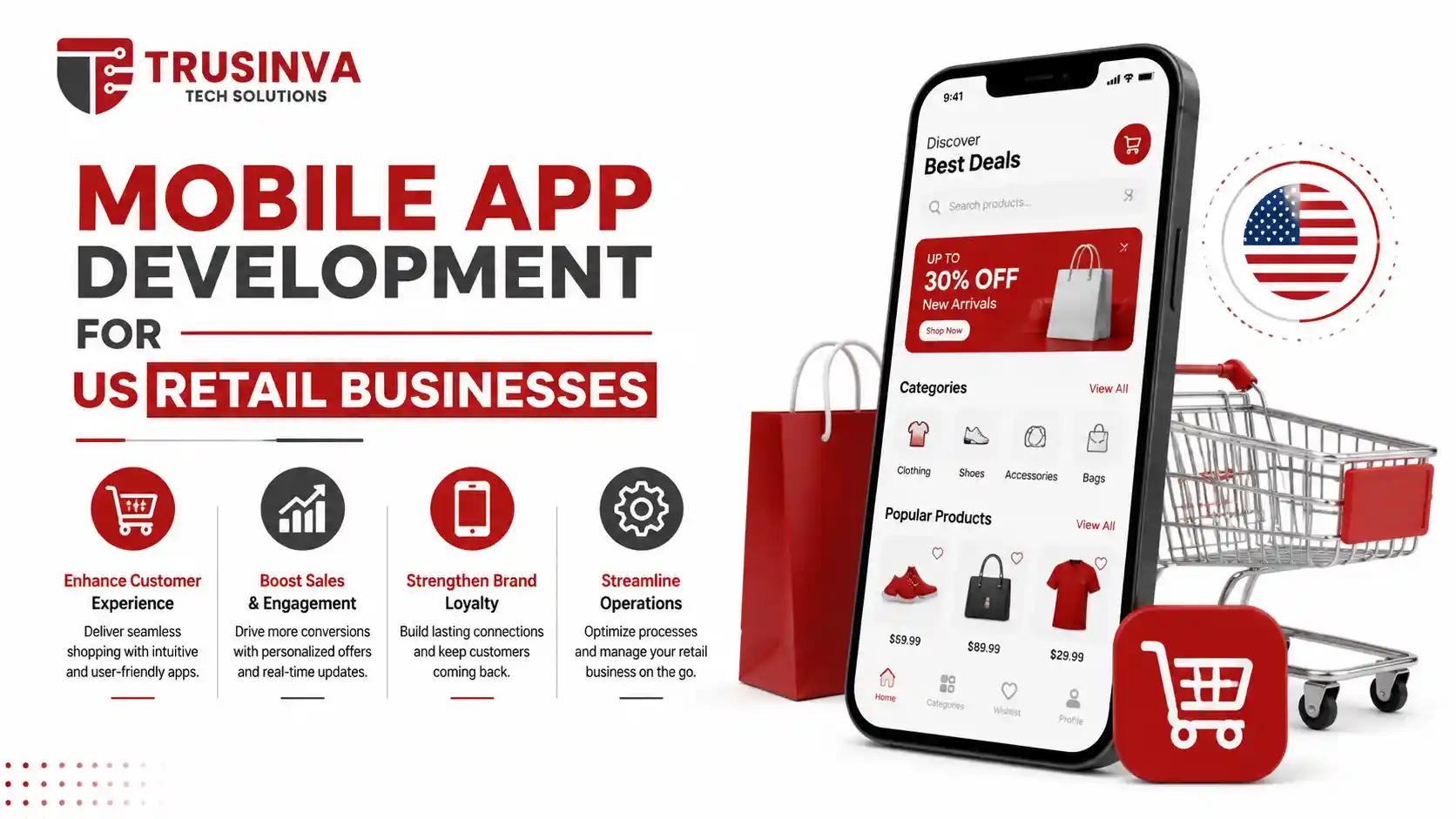
If you run a retail business in 2026 and you still don't have a mobile app, you're leaving money on the table. Simple as that.
Customers today expect to browse, buy, and track orders from their phone. A well-built retail app doesn't just look good — it drives repeat purchases, builds loyalty, and gives you data that traditional stores never could.
In this guide, we'll break down everything you need to know about mobile app development for retail businesses — what it is, why it matters, the real benefits, the step-by-step process, and the mistakes that sink most retail app projects before they even launch.
What Is Retail Mobile App Development?
Retail mobile app development is the process of building a custom smartphone application that helps a retail business sell products, manage inventory, engage customers, and create a smoother shopping experience — on iOS, Android, or both.
Unlike a basic ecommerce website, a retail app lives on the customer's phone. It sends push notifications, remembers preferences, stores payment details securely, and often works even with a spotty internet connection.
Think of it as your storefront, your loyalty program, and your customer service desk — all packed into one app icon on someone's home screen.
Why Retail Businesses Need Mobile Apps in 2026
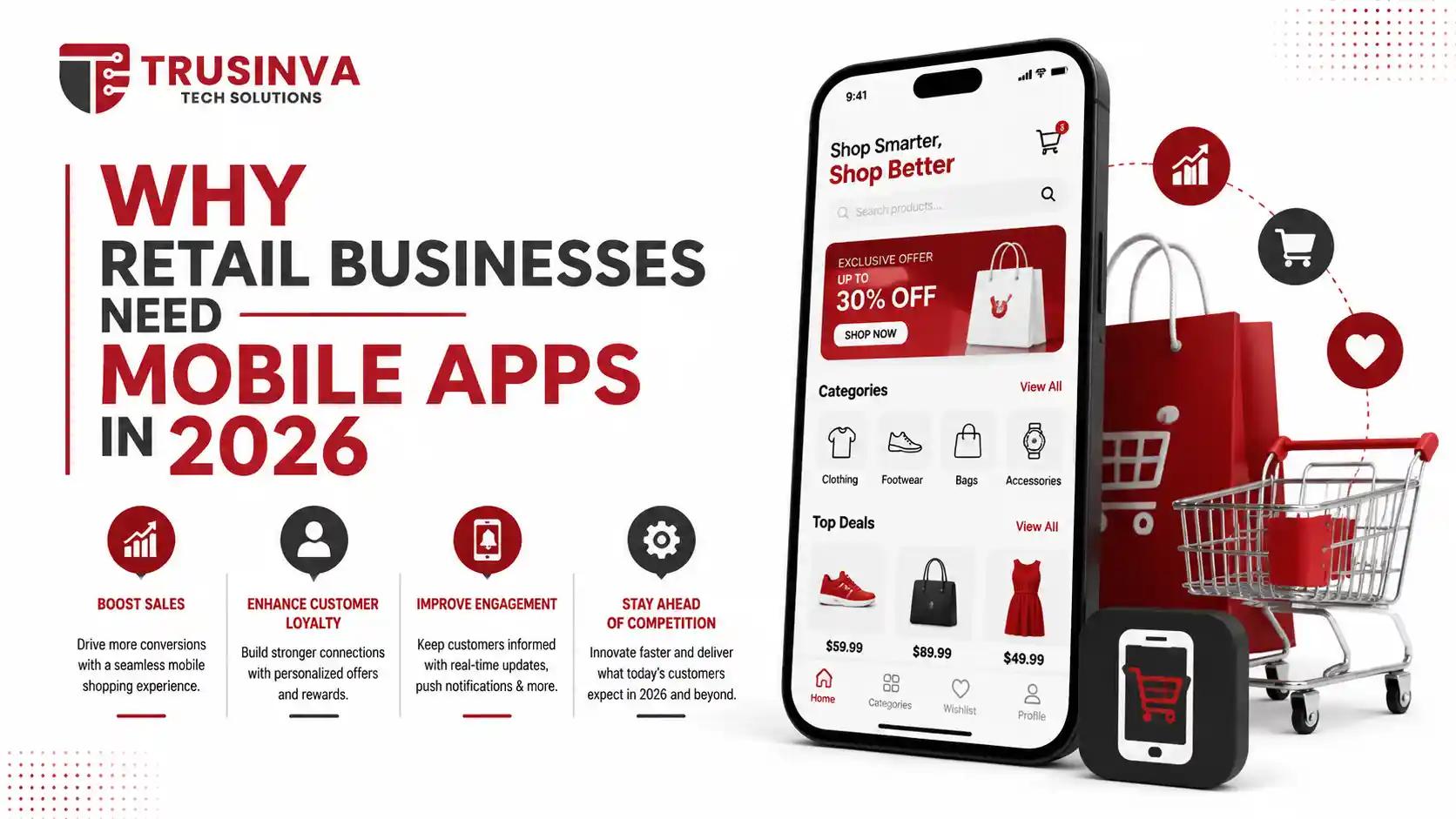
The retail landscape has shifted. Foot traffic alone doesn't sustain most stores anymore — customers research, compare, and buy on their phones long before they ever walk through a door, if they walk in at all.
Here's the reality:
- Shoppers browse mobile-first, even for in-store purchases
- Loyalty and rewards programs perform far better inside an app than through email
- Push notifications convert better than most email campaigns
- Retailers without an app are losing repeat customers to competitors who do
This applies whether you're a boutique in Lahore, a growing ecommerce brand in Texas, or a multi-location retail chain across the US. The businesses investing in digital transformation now are the ones setting themselves up to lead their category in the next few years.
Key Benefits of Mobile App Development for Retail Businesses
A retail app isn't just a "nice to have." Done right, it becomes one of the highest-ROI investments a retail business can make.
- Direct customer engagement — push notifications reach customers instantly, no algorithm gatekeeping like social media
- Higher customer retention — apps make repeat purchases effortless, boosting loyalty
- Digital rewards and loyalty programs — replace paper punch cards with automated, trackable rewards
- Better checkout experience — integrated payment gateways reduce cart abandonment
- Real-time inventory visibility — customers see stock levels instantly, reducing frustration
- Valuable customer analytics — understand buying habits and personalize offers
- Omnichannel consistency — connect your physical store, website, and app into one experience
- Competitive advantage — many small and mid-sized retailers still don't have apps, which is your opening
The businesses that treat their app as a growth channel — not just a digital brochure — are the ones seeing the biggest returns.
Step-by-Step Process: How Retail Mobile Apps Get Built
Building a retail app isn't guesswork. Here's how a proper development process typically flows.
- Discovery and strategy — Define your goals: is this app for sales, loyalty, customer service, or all three? This shapes every decision after.
- Feature planning — Decide on must-haves like product catalog, shopping cart, payment gateway integration, order tracking, push notifications, and loyalty tools.
- UI/UX design — Wireframe and design an experience that's simple, fast, and intuitive. Retail apps live or die on how easy they are to browse and checkout.
- Platform decision — Choose native (iOS/Android separately) or cross-platform development using tools like Flutter or React Native, depending on budget and timeline.
- Backend and integrations — Connect your POS system, inventory management, CRM, and payment gateway so everything talks to each other in real time.
- Development and testing — Build the app in sprints, test for bugs, security gaps, and performance across devices.
- Launch and app store optimization — Publish to the App Store and Google Play with optimized listings to improve discoverability.
- Post-launch support — Monitor performance, gather user feedback, and roll out updates and new features regularly.
Skipping steps — especially discovery and testing — is exactly how retail app projects go over budget and underdeliver.
Common Mistakes Retail Businesses Make
Most retail app failures don't come from bad ideas. They come from avoidable planning mistakes.
Building an app before defining a strategy. Jumping straight into design without a clear goal leads to bloated apps that try to do everything and excel at nothing.
Ignoring POS and inventory integration. An app that shows the wrong stock levels or can't sync with your store systems frustrates customers fast.
Overcomplicating the checkout flow. Every extra step in checkout increases cart abandonment. Simplicity wins.
Skipping app store optimization. A great app that nobody can find is a wasted investment.
No post-launch plan. Retail apps need updates, bug fixes, and new features regularly — treating launch as the finish line is a mistake.
Choosing developers based on price alone. Cheap development often means poor security, weak integrations, and expensive fixes down the line.
Why Choose Trusinva Tech Solutions
At Trusinva Tech Solutions, we've helped retail and ecommerce businesses across the USA and internationally turn app ideas into real revenue-generating tools.
Our mobile app development team builds custom retail apps with secure payment integration, real-time inventory syncing, and loyalty features designed to bring customers back.
We don't stop at apps. Our broader services cover the full digital ecosystem retail businesses need to grow:
- Web Development and Shopify Development for your online storefront
- SEO Services to help customers find you organically
- Digital Marketing, including Google Ads and Social Media Marketing
- CRM Development to manage and grow customer relationships
- UI/UX Design to make sure your app actually converts
- Specialized business support like Truck Dispatching and Medical Billing solutions for niche industries
You can browse examples of our past work on our projects page, read more insights on our blog, or learn more about our team.
We also run practical, career-focused courses — including Truck Dispatching, Medical Billing, and taxation programs covering USA, UK, UAE, and KSA — for those looking to build in-demand skills alongside their business growth.
Whether you're a small retail startup or an established chain looking to modernize, our team builds solutions around your actual business goals — not generic templates.
Frequently Asked Questions
How much does it cost to develop a retail mobile app? Costs vary based on features, platform choice, and integrations, typically ranging from a few thousand dollars for a basic app to significantly more for enterprise-level solutions with custom POS and CRM integrations.
How long does it take to build a retail app? Most retail apps take anywhere from 8 to 16 weeks, depending on complexity, the number of integrations, and whether you're building for one platform or both iOS and Android.
What features should a retail mobile app have? At minimum, a strong retail app needs a product catalog, secure checkout, order tracking, push notifications, and a loyalty or rewards system.
Can a small retail business afford a mobile app? Yes. Many developers, including our team, offer scalable app packages that start with core features and expand as your business grows.
Should I choose native or cross-platform app development? Cross-platform frameworks like Flutter or React Native are usually more cost-effective for small to mid-sized retailers, while native development suits businesses needing maximum performance and platform-specific features.
Why do retail apps fail after launch? Most fail due to poor planning, weak integrations with existing systems, or no post-launch update strategy — not because the idea itself was bad.
Final Thoughts
A retail mobile app isn't just a trend — it's becoming the standard for how customers shop, engage, and stay loyal to brands they trust. The retailers who invest now, with the right strategy and the right development partner, are the ones who'll own their market in the years ahead.
If you're ready to build a retail app that actually drives sales and keeps customers coming back, contact Trusinva Tech Solutions for professional digital services and business growth.