Healthcare organizations across the United States are under more pressure than ever to deliver personalized care while managing growing volumes of patient data, appointments, insurance claims, and compliance requirements. A generic, off-the-shelf CRM often can't keep up with the complexity of clinical workflows — which is why more clinics, hospitals, and telehealth startups are turning to custom-built solutions. At Trusinvatechsolutions, we work with healthcare providers who need a system built around their exact workflows, not the other way around. This guide walks through what a custom healthcare CRM actually is, why it matters, what it costs, and how to build one the right way in 2026 — informed by our own experience delivering CRM development and healthcare software projects for U.S. clients.
Whether you run a small specialty clinic or manage IT for a multi-location hospital network, this guide gives you a practical, no-fluff roadmap.
What Is a Healthcare CRM?
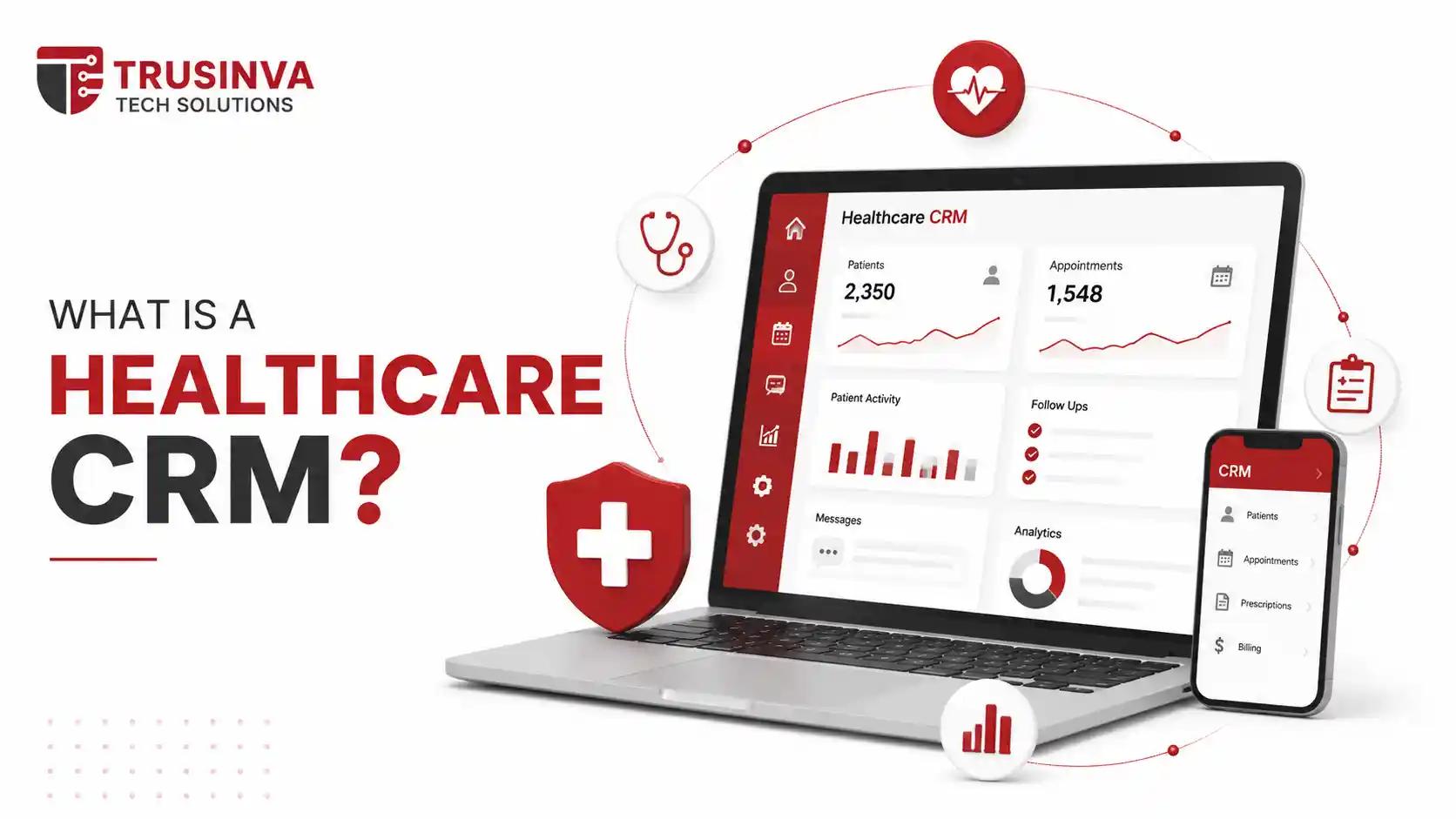
A healthcare CRM (Customer Relationship Management) system is software built to manage relationships and interactions between a healthcare organization and its patients. Unlike a sales-focused CRM, a healthcare CRM tracks patient communication, appointment history, referrals, follow-ups, and engagement — while staying compliant with healthcare privacy laws like HIPAA.
In short: it's the system that helps a clinic remember who a patient is, what they need next, and how to reach them — securely.
Why a Custom Healthcare CRM Matters in 2026
Off-the-shelf CRMs like generic sales tools were never designed with clinical workflows, insurance verification, or protected health information (PHI) in mind. That mismatch creates real problems:
- Manual workarounds that increase staff workload
- Compliance gaps that put patient data at risk
- Poor integration with Electronic Health Records (EHR) or Electronic Medical Records (EMR)
- Missed follow-ups that hurt patient outcomes and retention
A custom-built system solves this by aligning the CRM directly with how your organization actually operates — from patient intake to billing to long-term care coordination. According to HHS.gov, covered healthcare entities are legally required to safeguard patient information, which makes purpose-built, HIPAA-compliant software a necessity rather than a nice-to-have.
Benefits of a Custom Healthcare CRM
A well-built healthcare CRM does far more than store contact details. Here's what organizations typically gain:
- Centralized patient data — one place for demographics, history, communication logs, and preferences
- Better patient engagement — automated reminders, follow-ups, and personalized outreach
- Improved staff efficiency — less manual data entry, fewer scheduling conflicts
- Stronger compliance posture — built-in HIPAA-aligned access controls and audit trails
- Smarter decision-making — dashboards and analytics that reveal patient trends and operational bottlenecks
- Seamless EHR/EMR integration — no more toggling between disconnected systems
- Scalability — the system grows with your patient volume and services, unlike rigid legacy tools
For a growing clinic, these benefits translate directly into fewer no-shows, faster claims processing, and a smoother patient experience overall.
Essential Features of Healthcare CRM Software
Before development starts, it helps to know what "good" looks like. Most successful healthcare CRMs include:
- Secure patient portal — for messaging, records access, and appointment requests
- Appointment scheduling and reminders — automated SMS/email/voice reminders to reduce no-shows
- EHR/EMR integration — bi-directional syncing with existing clinical systems
- Role-based access control — ensuring staff only see the data relevant to their role
- Medical billing and insurance verification tools — reducing claim denials and billing delays
- Healthcare analytics dashboard — visualizing patient volume, engagement, and outcomes
- Referral and lead management — tracking new patient inquiries and referral sources
- Telehealth integration — supporting virtual visits directly from the CRM
- HIPAA-compliant data encryption — both at rest and in transit
- Mobile accessibility — for both patients and care teams on the go
Step-by-Step Guide: How to Build a Custom Healthcare CRM
Here's the practical development process we follow when building healthcare CRM systems for U.S. clients.
Step 1: Define your clinical and operational requirements Start by mapping out your patient journey — from first contact to ongoing care. Identify the pain points your current system (or spreadsheets) can't solve.
Step 2: Choose the right development partner Look for a team with proven healthcare software development experience and a clear understanding of HIPAA. Review past projects and ask for references.
Step 3: Plan the architecture and integrations Decide how the CRM will connect with your EHR/EMR, billing systems, and insurance verification tools. This is where a solid technical foundation prevents costly rework later.
Step 4: Design the UI/UX around real clinical workflows Healthcare staff are busy — the interface needs to be intuitive. Our UI/UX design team typically runs workflow interviews with front-desk and clinical staff before finalizing wireframes.
Step 5: Build with security and compliance baked in HIPAA compliance isn't a feature you add later — it has to be part of the architecture from day one (encryption, access logs, audit trails).
Step 6: Test rigorously This includes functional testing, security penetration testing, and usability testing with actual clinical staff.
Step 7: Deploy, train, and support Roll out in phases if possible, train staff thoroughly, and set up an ongoing support and maintenance plan.
Tip
Start with a pilot rollout in one department or location before a full-scale launch. It surfaces workflow issues early, when they're cheap to fix.
HIPAA Compliance Requirements
Any healthcare CRM handling patient data in the U.S. must comply with the Health Insurance Portability and Accountability Act (HIPAA). Key requirements include:
- Access controls — unique user IDs, role-based permissions, and automatic logoff
- Audit trails — logging who accessed what data and when
- Data encryption — both at rest and during transmission
- Business Associate Agreements (BAAs) — required with any vendor or developer handling PHI
- Breach notification protocols — a documented process for responding to data incidents
A HIPAA-compliant CRM development company should be able to walk you through each of these requirements and show how they're implemented technically — not just tell you the system is "compliant."
Healthcare CRM Development Process (Timeline Overview)
| Phase | Typical Duration | What Happens |
| Discovery & Requirements | 2–4 weeks | Workflow mapping, compliance planning |
| UI/UX Design | 3–5 weeks | Wireframes, prototypes, staff feedback |
| Development | 8–16 weeks | Core build, integrations, security layer |
| Testing & QA | 3–4 weeks | Functional, security, and usability testing |
| Deployment & Training | 2–3 weeks | Rollout, staff onboarding, go-live support |
Most custom healthcare CRM projects take 4 to 7 months from discovery to full deployment, depending on scope and the number of integrations required.
Cost to Build a Healthcare CRM
Healthcare CRM development cost depends heavily on complexity, integrations, and compliance scope. As a general guide for the U.S. market:
- Basic CRM (scheduling, patient records, messaging): $25,000–$50,000
- Mid-complexity CRM (EHR integration, billing, analytics): $50,000–$120,000
- Enterprise-grade CRM (multi-location, AI features, advanced integrations): $120,000–$300,000+
Ongoing maintenance, hosting, and compliance updates typically add 15–20% of the initial build cost annually. Getting an accurate quote requires a discovery call — you can contact our team to scope your specific project.
Healthcare CRM vs Traditional CRM vs EHR
People often confuse these three systems. Here's the difference at a glance:
| Feature | Traditional CRM | Healthcare CRM | EHR/EMR |
| Primary purpose | Sales & customer relationships | Patient engagement & communication | Clinical documentation |
| HIPAA compliance | Not built-in | Required and built-in | Required and built-in |
| Appointment scheduling | Basic or none | Advanced, healthcare-specific | Limited |
| Clinical data storage | No | Limited (references EHR) | Yes, full clinical records |
| Billing integration | Generic | Medical billing-specific | Often included |
| Best for | Sales teams | Patient relationship management | Clinical care documentation |
A healthcare CRM and an EHR aren't competitors — they work best together, with the CRM handling engagement and communication while the EHR manages clinical documentation.
AI Features in Healthcare CRM (2026)
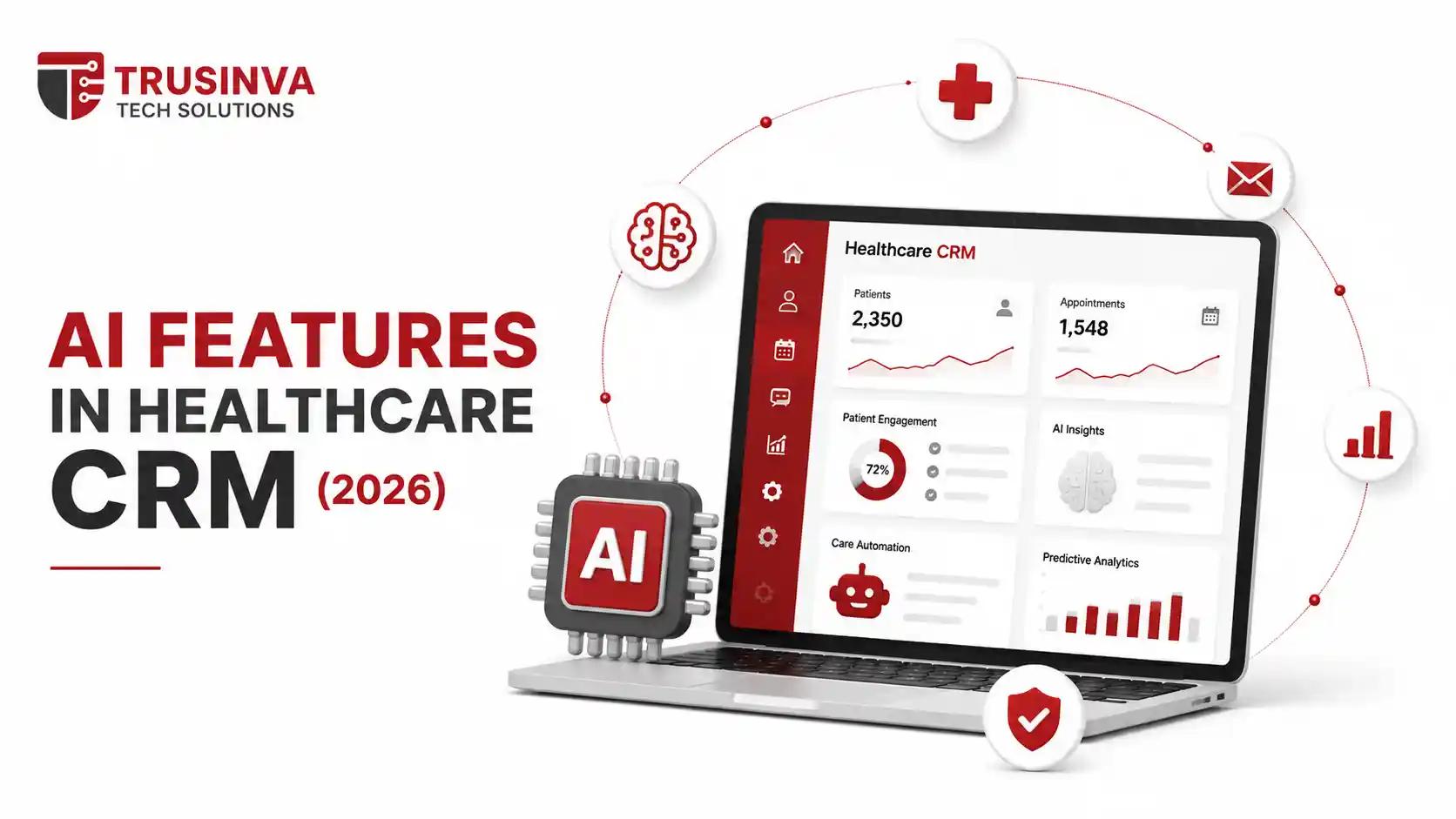
AI is reshaping what a healthcare CRM can do. In 2026, the most forward-looking systems include:
- AI-powered patient engagement — smart reminders that adapt to patient behavior
- Predictive analytics — flagging patients at risk of missed appointments or declining engagement
- AI chatbots and virtual assistants — handling routine scheduling and FAQ-style patient questions
- Natural language processing (NLP) — summarizing patient communication history automatically
- Automated documentation support — reducing administrative burden on staff
- Smart triage suggestions — helping front-desk staff prioritize urgent inquiries
These AI capabilities aren't replacing clinical judgment — they're reducing administrative load so care teams can focus on patients.
Tip
When evaluating AI features, ask vendors specifically how patient data is used to train or fine-tune any models. This matters both for compliance and for patient trust.
Choosing the Right Healthcare CRM Development Company
Not every software vendor understands healthcare. When evaluating a custom CRM development partner, look for:
- Demonstrated healthcare or regulated-industry experience
- A clear, documented approach to HIPAA compliance
- Willingness to sign a Business Associate Agreement (BAA)
- Strong UI/UX practices tailored to clinical staff, not just general users
- Post-launch support and maintenance plans
- Transparent pricing and development timelines
At Trusinvatechsolutions, our team also supports related services like medical billing workflows and web development, which means we can build a CRM that connects cleanly with the rest of your digital operations — not just the patient-facing side.
Frequently Asked Questions
What is a healthcare CRM? A healthcare CRM is software that manages patient relationships, communication, scheduling, and engagement while remaining compliant with HIPAA and other healthcare privacy regulations.
How much does it cost to build a healthcare CRM? Costs typically range from $25,000 for a basic system to $300,000+ for an enterprise-grade platform with AI features and multiple integrations.
Why do hospitals need CRM software? Hospitals use CRM software to manage patient communication, reduce no-shows, coordinate care across departments, and improve overall patient retention and satisfaction.
Can a CRM integrate with EHR systems? Yes. A well-built healthcare CRM integrates with EHR and EMR platforms to sync patient records, appointment data, and communication history without duplicate data entry.
Is a custom CRM better than an off-the-shelf one for clinics? For most clinics with specific compliance or workflow needs, yes — a custom CRM adapts to your processes, while off-the-shelf tools force you to adapt to theirs.
How long does healthcare CRM development take? Most projects take 4 to 7 months from discovery through deployment, depending on complexity and the number of system integrations required.
Conclusion:
A custom healthcare CRM isn't just a technology upgrade — it's an investment in better patient relationships, smoother operations, and long-term compliance peace of mind. Whether you're a small clinic ready to modernize or a hospital network planning a multi-location rollout, the right development partner makes all the difference.
Trusinvatechsolutions has helped U.S. healthcare organizations plan and build CRM systems that fit real clinical workflows, not generic templates. If you're ready to explore what a custom healthcare CRM could look like for your organization, book a seat at Trusinvatechsolutions and let's talk through your project.