Quick Answer
Custom software development in the USA typically costs between $25,000 and $500,000+ in 2026, depending on project complexity, features, and team composition. Small business tools start around $25,000–$60,000, mid-size enterprise applications range from $60,000–$150,000, and large-scale enterprise or AI-integrated systems can exceed $500,000.
Introduction
Deciding to invest in custom software is a major financial commitment for any business, and getting a realistic cost estimate upfront can mean the difference between a project that delivers ROI and one that drains budget without results. In 2026, software pricing in the USA varies enormously depending on complexity, industry, and technology stack — which is exactly why vague online estimates rarely hold up in practice.
At Trusinva Tech Solutions, we help startups, SMBs, and enterprises plan and build everything from lean MVP development projects to full-scale CRM systems and enterprise web applications, and cost is always the first conversation. This guide breaks down what actually drives custom software development cost in 2026, including how UI/UX design and infrastructure choices affect your final budget, so you can plan your project with confidence.
Key Takeaways
- Custom software costs generally fall between $25,000 and $500,000+, based on scope and industry.
- US-based development teams charge $80–$200/hour, while offshore teams charge $25–$60/hour.
- Major cost drivers include feature complexity, integrations, compliance requirements, and infrastructure choices.
- Ongoing costs — hosting, DevOps, and maintenance — typically add 15–20% of the build cost annually.
- A structured discovery and technical specification phase can reduce final costs by 20–30% by preventing scope creep.
Table of Contents
- What Is Custom Software Development
- Average Custom Software Development Cost in the USA (2026)
- Cost Breakdown by Project Type
- Key Factors That Affect Software Development Cost
- Hourly Developer Rates: USA vs. Offshore Teams
- Cost by Software Category: Web, Mobile, SaaS, Enterprise
- Hidden Costs Businesses Often Overlook
- How to Reduce Custom Software Development Costs
- Custom Software vs. Off-the-Shelf Software: Cost Comparison
- Case Study: A Realistic Enterprise Software Budget
- Common Mistakes That Inflate Software Costs
- Expert Tips for Budgeting Your Software Project
- Future Trends in Software Development Pricing
- FAQs
- Conclusion
1. What Is Custom Software Development
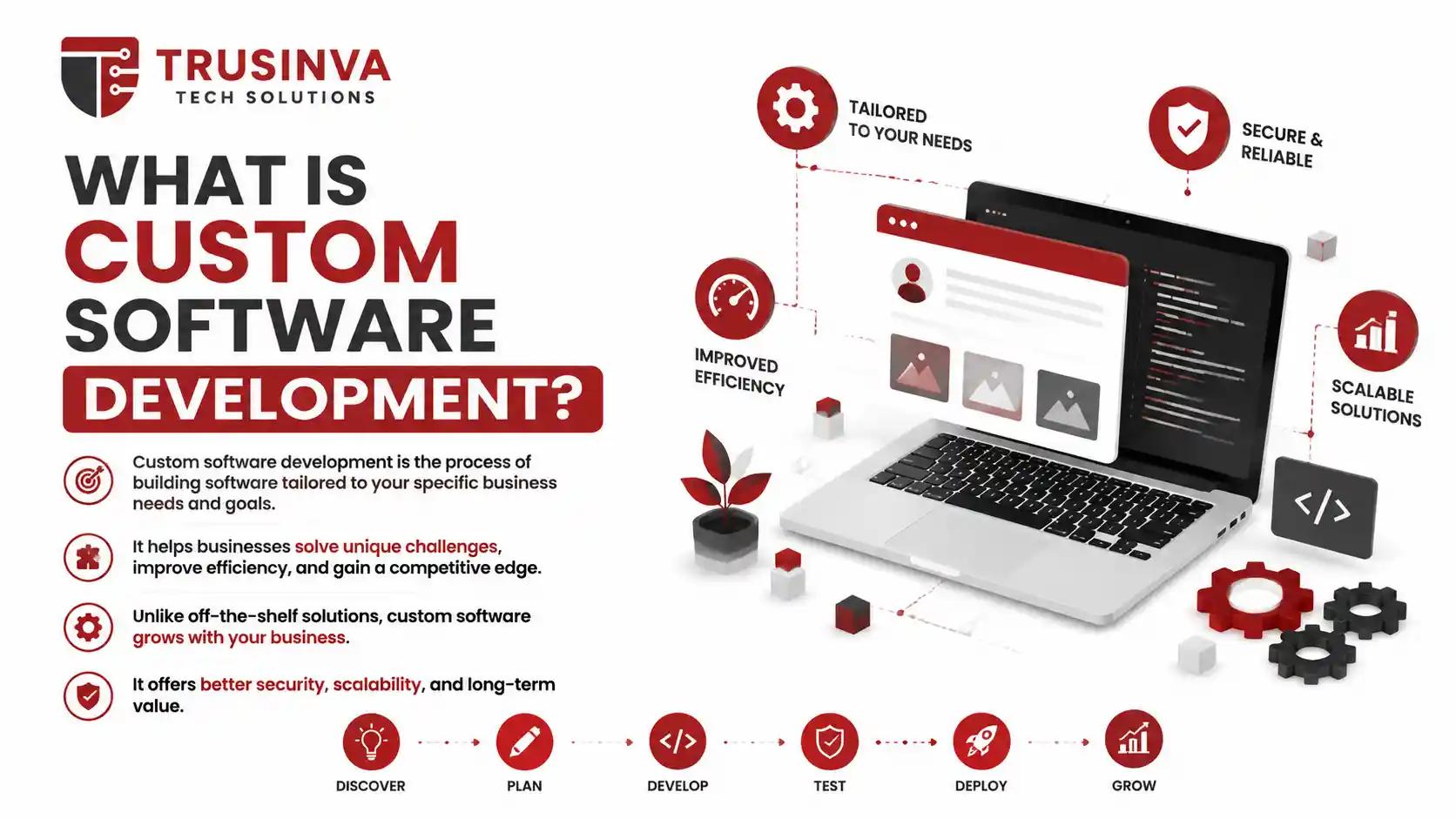
Custom software development is the process of designing, building, and deploying software tailored specifically to a business's unique workflows and requirements, rather than using generic off-the-shelf tools. Unlike pre-built platforms, custom software is built around exactly how a company operates, which often improves efficiency but requires a more deliberate cost and planning process upfront.
Businesses turn to custom development when off-the-shelf software can't handle their specific processes, scale, or integrations — common in healthcare, logistics, finance, and manufacturing, where compliance and workflow requirements are highly specific.
2. Average Custom Software Development Cost in the USA (2026)
In 2026, custom software projects in the US typically range from $25,000 for small internal tools to $500,000+ for enterprise-grade systems, with pricing shaped by scope, industry compliance needs, and the technology stack chosen for development.
| Software Type | Estimated Cost (2026) | Typical Timeline |
| Small business tool / internal app | $25,000 – $60,000 | 8–12 weeks |
| Mid-size business application | $60,000 – $150,000 | 12–24 weeks |
| Enterprise software / complex system | $150,000 – $500,000+ | 6–12 months |
3. Cost Breakdown by Project Type
Small business software: Single-purpose tools like internal dashboards or basic workflow automation, often built with frameworks like Laravel or Django for speed and lower cost.
Mid-size business applications: Multi-user platforms with role-based access, payment processing, reporting, and moderate integrations — common for SaaS products and operational tools built on Node.js, React, or .NET.
Enterprise software: Large-scale systems requiring custom architecture, high availability, advanced security (SOC 2, ISO 27001), and integrations with existing enterprise systems like Salesforce or Oracle. These projects require senior engineering teams and extended QA and DevOps cycles.
4. Key Factors That Affect Software Development Cost
- Feature complexity — Every additional workflow, user role, or automation adds engineering time.
- Technology stack — Choices like React, Angular, or Vue.js on the frontend, and Java, Python, or .NET on the backend, affect both speed and cost.
- Integrations — Connecting to CRMs, ERPs, payment gateways, or APIs (REST, GraphQL, gRPC) increases development and testing effort.
- Compliance requirements — Industries like healthcare (HIPAA), finance (PCI DSS), and enterprise clients (SOC 2, GDPR) require additional security engineering.
- Team location — US-based teams cost significantly more per hour than nearshore or offshore alternatives.
- Infrastructure — Cloud provider choice (AWS, Microsoft Azure, Google Cloud) and DevOps setup (Kubernetes, Docker, Terraform) affect both build and ongoing costs.
5. Hourly Developer Rates: USA vs. Offshore Teams
US-based software development teams typically charge $80–$200 per hour, nearshore teams (Latin America) charge $40–$90 per hour, and offshore teams (South Asia, Eastern Europe) charge $25–$60 per hour. Many businesses use a blended model — US-based product strategy paired with an efficient offshore or nearshore engineering team — to control costs without sacrificing quality.
| Team Type | Hourly Rate (USD) | Best For |
| US-based agency | $80 – $200 | High-compliance, enterprise-grade software |
| Nearshore (LatAm) | $40 – $90 | Real-time collaboration with cost savings |
| Offshore (Asia/E. Europe) | $25 – $60 | Budget-conscious projects with flexible timelines |
6. Cost by Software Category: Web, Mobile, SaaS, Enterprise
Web applications (built with React, Angular, or Vue.js) are generally the most cost-efficient starting point for most businesses. Mobile app development using Flutter or React Native costs more but expands reach to iOS and Android users. SaaS platforms require additional investment in multi-tenancy architecture and subscription billing, while enterprise software carries the highest cost due to compliance, scale, and integration demands with systems like Salesforce, Oracle, or IBM platforms.
7. Hidden Costs Businesses Often Overlook
Many companies budget for development but underestimate the costs that keep software running and secure long-term:
- Cloud hosting and DevOps — Ongoing AWS, Azure, or Google Cloud costs, plus CI/CD pipelines using tools like Jenkins or GitHub Actions.
- QA testing — Manual and automated testing across environments and user roles.
- Post-launch maintenance — Bug fixes, security patches, and updates, typically 15–20% of build cost annually.
- Compliance audits — Especially critical for healthcare, finance, and enterprise clients requiring SOC 2 or ISO 27001 certification.
- Database and infrastructure scaling — Costs increase as user load and data volume grow.
- Third-party licensing — Tools like Atlassian, GitLab, or monitoring platforms.
Important Note: Businesses that skip a technical specification phase often see costs increase by 25–40% mid-project due to unplanned scope changes.
8. How to Reduce Custom Software Development Costs
- Invest in a discovery and technical specification phase before development begins.
- Prioritize a core feature set first, and phase in secondary features post-launch.
- Choose cloud-native architecture to reduce long-term infrastructure costs.
- Use established frameworks (Laravel, Django, Spring Boot, .NET) instead of building custom infrastructure from scratch.
- Partner with a development team experienced in your specific industry to avoid costly rework.
Agencies like Trusinva Tech Solutions structure projects around discovery-first development, helping businesses avoid the scope creep that typically drives up custom software budgets.
9. Custom Software vs. Off-the-Shelf Software: Cost Comparison
| Factor | Custom Software | Off-the-Shelf Software |
| Upfront cost | Higher ($25,000+) | Lower (subscription-based) |
| Long-term fit | Built around your workflow | Requires adapting workflow to software |
| Scalability | Fully scalable to business needs | Limited by vendor's roadmap |
| Ongoing cost | Maintenance and hosting | Recurring license fees |
| Best for | Unique processes, compliance-heavy industries | Standard, common business functions |
10. Case Study: A Realistic Enterprise Software Budget
A mid-size healthcare logistics company needed a custom system to manage compliance-heavy scheduling, driver tracking, and HIPAA-compliant data handling. After a structured discovery phase reduced the initial feature list by 30%, the final system — built with Python/Django on the backend and React on the frontend — launched in five months at approximately $180,000, including compliance testing and three months of post-launch support. This reflects the kind of disciplined scoping needed for enterprise software and CRM projects in regulated industries.
11. Common Mistakes That Inflate Software Costs
- Skipping the discovery and technical specification phase.
- Building for hypothetical future scale instead of current business needs.
- Choosing a technology stack based on trends rather than project requirements.
- Underestimating compliance and security engineering time.
- Ignoring UX research, leading to costly redesigns after launch.
12. Expert Tips for Budgeting Your Software Project
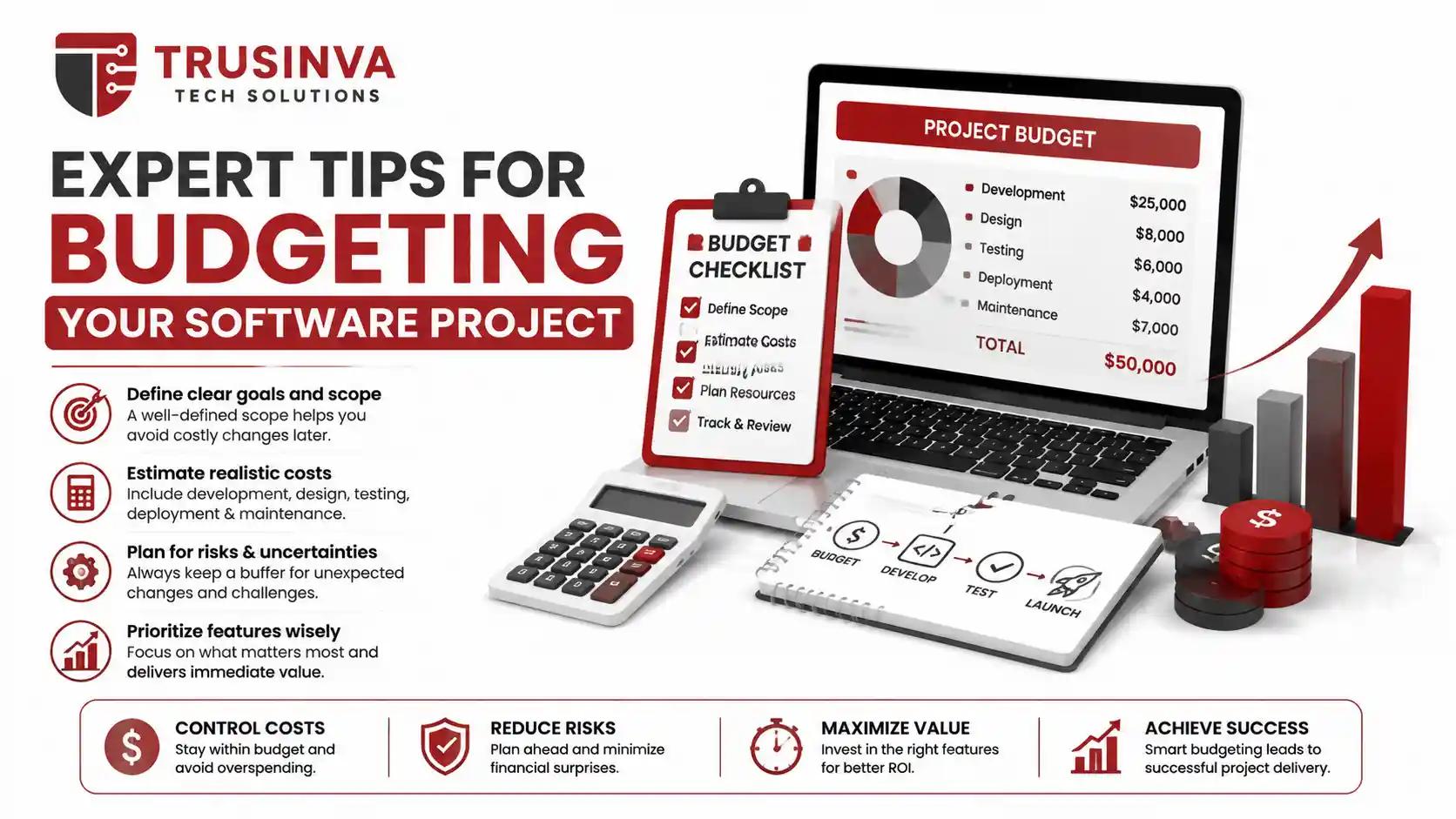
- Request a detailed, line-item cost breakdown from any development partner, not a single lump-sum quote.
- Build in a 15–20% contingency buffer for scope adjustments.
- Separate build cost from ongoing maintenance cost when budgeting annually.
- Prioritize compliance requirements early if your industry is regulated — retrofitting security is far more expensive than building it in from the start.
13. Future Trends in Software Development Pricing
Heading further into 2026, AI-assisted development tools are reducing coding time for standard features, gradually lowering baseline costs for common software components. At the same time, demand for AI-integrated business systems — using tools like OpenAI's APIs — is adding new cost categories. Expect standard software development pricing to stabilize or slightly decrease, while AI-native and highly regulated enterprise systems trend toward the higher end of the cost spectrum.
FAQs
Q1: How much does custom software cost in the USA in 2026? Custom software typically costs $25,000–$500,000+, depending on project complexity, industry, and compliance requirements.
Q2: How long does custom software development take? Most projects take 8 weeks to 12 months, depending on scope, with enterprise systems taking longer due to compliance and integration needs.
Q3: Is offshore software development cheaper than US-based development? Yes. Offshore teams typically charge $25–$60/hour compared to $80–$200/hour for US-based teams, though time zone and communication factors should be considered.
Q4: What's the difference between custom software and off-the-shelf software? Custom software is built specifically around a business's workflows, while off-the-shelf software is a pre-built, generic solution requiring businesses to adapt their processes to it.
Q5: Does custom software cost include ongoing maintenance? No, maintenance is typically billed separately and costs roughly 15–20% of the initial development cost per year.
Q6: What increases custom software development cost the most? Compliance requirements (HIPAA, SOC 2, PCI DSS), complex integrations, and enterprise-scale architecture are the biggest cost drivers.
Q7: Should a startup choose custom software or an MVP first? Most startups should validate their idea with an MVP before investing in full custom software, since MVPs cost less and test market fit faster.
Q8: Can small businesses afford custom software? Yes. Small business tools with focused functionality typically start around $25,000, making custom software accessible for targeted use cases.
Conclusion
Custom software development cost in the USA for 2026 ranges widely — from $25,000 for a focused internal tool to $500,000+ for a complex, compliance-heavy enterprise system — and the right number for your business depends entirely on your actual operational needs, not industry averages. Businesses that budget successfully are the ones that invest in discovery, prioritize core functionality, and choose a development partner who scopes projects honestly rather than padding budgets with unnecessary features.
If you're planning a custom software project and want a clear, realistic cost estimate based on your specific business needs, Trusinva Tech Solutions can walk you through a discovery session and detailed pricing breakdown tailored to your goals — Book a Seat for a free consultation and get a clear development roadmap before committing your budget.