Quick Answer
Custom software development cost depends on project scope, complexity, integrations, and the development team's location and expertise. A simple MVP typically costs far less than a full enterprise platform with multiple integrations, compliance requirements, and ongoing DevOps support. Most companies price projects using fixed-bid, time-and-materials, or dedicated team models — each suited to different project types.
Introduction
"How much will this cost?" is usually the first question business owners ask — and often the hardest one to answer honestly, because custom software pricing depends entirely on scope. Trusinva Tech Solutions works with startups and enterprises across the USA to scope projects properly before quoting a number, whether that's a lean MVP build, a full enterprise software development rollout, or a CRM development project tailored to a sales team's workflow. This guide breaks down exactly what drives custom software development cost, the pricing models agencies use, and how to budget realistically — so you walk into vendor conversations knowing what a fair quote actually looks like, and where a digital marketing budget should sit alongside your development spend once the product ships.
Key Takeaways
- There's no single "average price" for custom software — cost is driven by scope, not a flat industry rate.
- Fixed-price, time-and-materials, and dedicated team models each fit different project stages.
- Hidden costs (maintenance, third-party licenses, scaling) often get overlooked in early budgeting.
- Offshore and nearshore development can lower cost, but vendor experience matters more than location alone.
- The cheapest quote is rarely the cheapest total cost once rework and support are factored in.
Table of Contents
- What Determines Custom Software Development Cost
- Common Pricing Models Explained
- Cost by Project Type (MVP, SaaS, Enterprise)
- Cost by Development Team Location
- Hidden Costs Businesses Often Miss
- How to Get an Accurate Estimate
- How to Reduce Costs Without Cutting Quality
- Common Mistakes That Inflate Budgets
- Future Trends Affecting Software Costs
- Frequently Asked Questions
- Conclusion
1. What Determines Custom Software Development Cost
Custom software cost is driven by five core factors: project scope, technical complexity, integrations, compliance requirements, and the development team's rate structure. A simple internal tool with one user role costs a fraction of a multi-platform enterprise system with real-time data processing and regulatory compliance built in.
Primary Cost Drivers
- Number of features and user roles — more functionality means more development and QA time.
- Platform — web-only is generally cheaper than building web and mobile in parallel.
- Integrations — connecting to CRMs, ERPs, payment gateways, or third-party APIs adds engineering time.
- Compliance needs — HIPAA, SOC 2, or PCI DSS requirements add security architecture work.
- Design complexity — custom UI/UX work costs more than templated interfaces.
- Team structure — in-house, freelance, agency, or dedicated offshore team all carry different rate structures.
2. Common Pricing Models Explained
Software development companies typically price projects using one of three models, and picking the right one matters as much as the number itself.
| Pricing Model | Best For | How It Works |
| Fixed Price | Well-defined, smaller projects | Set scope, set price, minimal flexibility |
| Time & Materials | Projects likely to evolve | Billed hourly/monthly based on actual work |
| Dedicated Team | Long-term, ongoing development | Monthly rate for a committed team assigned to your project |
Expert tip: Fixed-price sounds safer, but it only works when requirements are fully locked in advance. Most real-world software projects evolve as you learn from early usage — which is why time-and-materials or dedicated team models often deliver better long-term value despite feeling less predictable upfront.
3. Cost by Project Type (MVP, SaaS, Enterprise)
MVP Development: Built to validate a business idea with core functionality only. Lower cost, faster timeline, minimal integrations — designed to test market fit before scaling investment.
SaaS Product Development: Requires multi-tenant architecture, subscription billing, and scalable cloud infrastructure from day one, which raises both cost and technical complexity compared to a single-business MVP.
Enterprise Software Development: The highest investment tier, typically involving multiple integrations, advanced security, custom workflows, and dedicated long-term support — reflecting the operational complexity of large organizations.
4. Cost by Development Team Location
| Team Location | Typical Cost Level | Trade-offs |
| In-house (USA) | Highest | Full control, easiest communication, highest overhead |
| Onshore Agency (USA) | High | Strong communication, USA compliance familiarity |
| Nearshore | Medium | Time zone alignment, moderate cost savings |
| Offshore | Lower | Greatest cost savings, requires strong process management |
Important note: Offshore and nearshore development can meaningfully reduce cost, but the savings only hold up if the vendor has strong project management and QA processes. A cheap offshore team with weak communication often costs more in the end through delays and rework.
5. Hidden Costs Businesses Often Miss
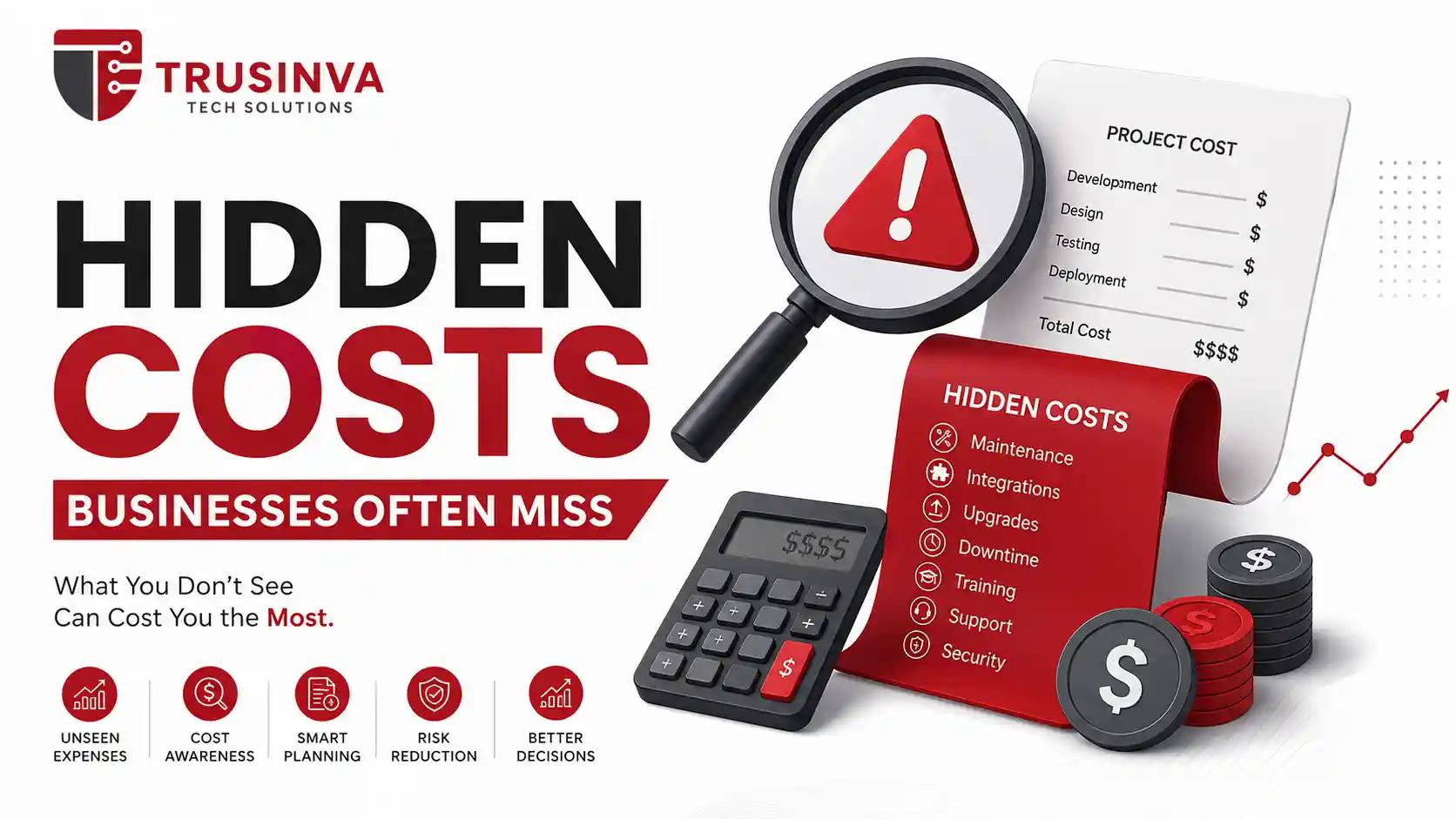
- Ongoing maintenance and bug fixes after launch
- Cloud hosting and infrastructure costs (AWS, Azure, GCP)
- Third-party API or software licensing fees
- Scaling costs as user volume grows
- Security audits and compliance renewals
- QA testing across devices and browsers
Common mistake: Budgeting only for the build phase and treating maintenance as an afterthought. Software isn't a one-time purchase — it needs ongoing support, similar to how a website needs continued SEO services after launch to keep generating traffic.
6. How to Get an Accurate Estimate
- Document your core business requirements before requesting quotes.
- Ask vendors for a discovery phase rather than an instant number.
- Request a breakdown by feature, not just a total figure.
- Clarify what's included post-launch (support, hosting, updates).
- Compare pricing models, not just totals — a lower fixed price with no flexibility can cost more long-term.
7. How to Reduce Costs Without Cutting Quality
- Start with an MVP instead of building every feature at once.
- Use proven frameworks (React, Node.js, Laravel) instead of custom-building common functionality.
- Prioritize core features first; phase in secondary features later.
- Choose a partner experienced in your industry to reduce learning-curve inefficiencies.
- Invest in QA early — catching bugs late in development is far more expensive than catching them early.
8. Common Mistakes That Inflate Budgets
- Changing requirements mid-sprint without adjusting timeline or budget
- Skipping the discovery phase to save time upfront
- Choosing the lowest quote without evaluating the vendor's process
- Ignoring maintenance costs in the initial budget
- Building features nobody has validated demand for
9. Future Trends Affecting Software Costs
- AI-assisted development is reducing build time for certain feature types, though it doesn't eliminate the need for skilled engineers.
- Cloud-native architecture is becoming the default, shifting cost from infrastructure ownership to usage-based cloud billing.
- DevOps and CI/CD adoption is reducing long-term maintenance costs by catching issues earlier.
- Rising compliance requirements across healthcare, finance, and data privacy are adding cost to projects handling sensitive data.
10. Why Choose Trusinva Tech Solutions for Cost-Effective Custom Software Development?
Understanding the cost of custom software development is easier with the right technology partner. Trusinva Tech Solutions helps businesses across the USA build high-quality custom software that fits their budget without compromising performance or scalability. We provide transparent pricing, detailed project planning, and tailored development strategies based on your business requirements. Whether you're developing a web application, mobile app, CRM, ERP, or enterprise software, our team focuses on delivering maximum value with efficient development processes and long-term support. With flexible engagement models and experienced developers, Trusinva Tech Solutions ensures you receive a cost-effective software solution that supports your business growth and future expansion.
11. Frequently Asked Questions
Q1. What's the average cost of custom software development? There's no fixed average — cost depends entirely on scope, features, integrations, and compliance needs, which can vary dramatically between projects.
Q2. Is fixed-price or time-and-materials better? Fixed-price works for small, well-defined projects. Time-and-materials suits projects likely to evolve, which is common in most real-world builds.
Q3. Does offshore development actually save money? Yes, often significantly, but only when the vendor has strong project management and QA processes in place.
Q4. How much does an MVP cost compared to a full platform? An MVP is significantly cheaper since it includes only core functionality needed to validate the idea, without full-scale integrations or advanced features.
Q5. What ongoing costs should I budget for after launch? Maintenance, hosting, security updates, and feature iterations should all be part of your post-launch budget, not treated as optional.
Q6. Can I reduce cost without sacrificing quality? Yes — starting with an MVP, using proven frameworks, and prioritizing core features first are effective ways to control cost responsibly.
Q7. Why do quotes vary so much between vendors? Differences usually come from team location, experience level, pricing model, and how thoroughly the vendor scoped the project before quoting.
Conclusion
Custom software development cost isn't a fixed number — it's a reflection of scope, complexity, and how well a project is planned before development begins. The businesses that budget most successfully are the ones who invest in a proper discovery phase, choose the right pricing model for their project type, and plan for maintenance from day one rather than treating it as an afterthought. Trusinva Tech Solutions helps USA businesses scope projects accurately so budgets stay realistic and predictable. If you're ready to get a clear, honest estimate for your project, Book a Seat for a free consultation and let's map out your costs together.