Quick Answer
An AI chatbot for business websites is a conversational AI tool that uses natural language processing to answer customer questions, qualify leads, and provide instant support 24/7. In 2026, businesses use AI chatbots to reduce response times, increase website conversions, and automate repetitive support tasks without adding headcount.
- AI chatbots reduce customer response time from hours to seconds, directly improving conversion rates.
- Modern chatbots use Large Language Models and Retrieval-Augmented Generation (RAG) for more accurate, context-aware answers.
- Integration with CRM, WhatsApp, and Slack extends chatbot value beyond the website itself.
- Costs range from free basic tools to $500–$5,000+/month for custom-built enterprise solutions.
- Data privacy compliance (GDPR, CCPA) is now a core requirement, not an afterthought.
Introduction
Visitors today expect instant answers, and a slow response is often the difference between a sale and a bounce. That's why more businesses are turning to Trusinva Tech Solutions to build AI-powered tools that keep websites responsive around the clock. An AI chatbot for business websites is one of the fastest ways to deliver that instant experience while cutting support costs. If you're weighing this alongside broader plans, our guides on CRM development for US sales teams, web development services in the USA, and turning website visitors into real customers pair well with this topic. This guide covers everything you need to know before adding one to your site in 2026.
What Is an AI Chatbot for Business Websites
Direct answer: An AI chatbot for business websites is software that uses natural language processing and machine learning to simulate human-like conversations, answering visitor questions, guiding them through a sales funnel, and escalating complex issues to human agents when needed.
Unlike rule-based bots that follow rigid scripts, modern AI chatbots — built on Large Language Models like GPT-5, Gemini, or Claude — understand context, intent, and even nuance in customer language. This means fewer frustrating "I didn't understand that" moments and more natural, helpful conversations.
How AI Chatbots Differ From Rule-Based Bots
Rule-based bots only respond to exact keyword matches. AI chatbots use intent recognition and context awareness to understand variations in phrasing, remember earlier parts of a conversation, and pull accurate answers from a knowledge base using Retrieval-Augmented Generation (RAG).
Why Businesses Need AI Chatbots in 2026
Direct answer: Businesses need AI chatbots in 2026 because customer expectations for instant response have outpaced what human support teams can deliver alone, and AI chatbots fill that gap while reducing operational costs.
Key drivers behind adoption:
- Customers expect answers within minutes, not hours
- Support teams are stretched thin across growing customer bases
- AI chatbots now handle nuanced queries, not just FAQs
- Businesses want 24/7 coverage without 24/7 staffing costs
- Chatbots double as lead generation and qualification tools
A well-built chatbot doesn't just answer questions — it actively supports the customer journey, similar to how a strong digital marketing strategy supports lead generation before the visitor ever reaches your site.
Key Features to Look For
Direct answer: The most important AI chatbot features in 2026 are natural language understanding, CRM integration, omnichannel support, human handoff, analytics, and data security compliance.
| Feature | Why It Matters |
| Natural Language Processing | Understands varied customer phrasing accurately |
| CRM Integration | Syncs leads and conversations automatically |
| Omnichannel Support | Works across website, WhatsApp, Messenger, Instagram |
| Human Handoff | Escalates complex issues to live agents smoothly |
| AI Analytics | Tracks conversation trends and conversion impact |
| Customization | Matches brand voice and specific business workflows |
| Data Security | Complies with GDPR, CCPA, SOC 2 standards |
Checklist: Is a Chatbot Platform Worth Considering?
- ✅ Supports your CMS (WordPress, Shopify, WooCommerce, etc.)
- ✅ Offers CRM and helpdesk integrations
- ✅ Provides clear analytics dashboards
- ✅ Has transparent, scalable pricing
- ✅ Meets data privacy and security standards
Benefits of AI Chatbots
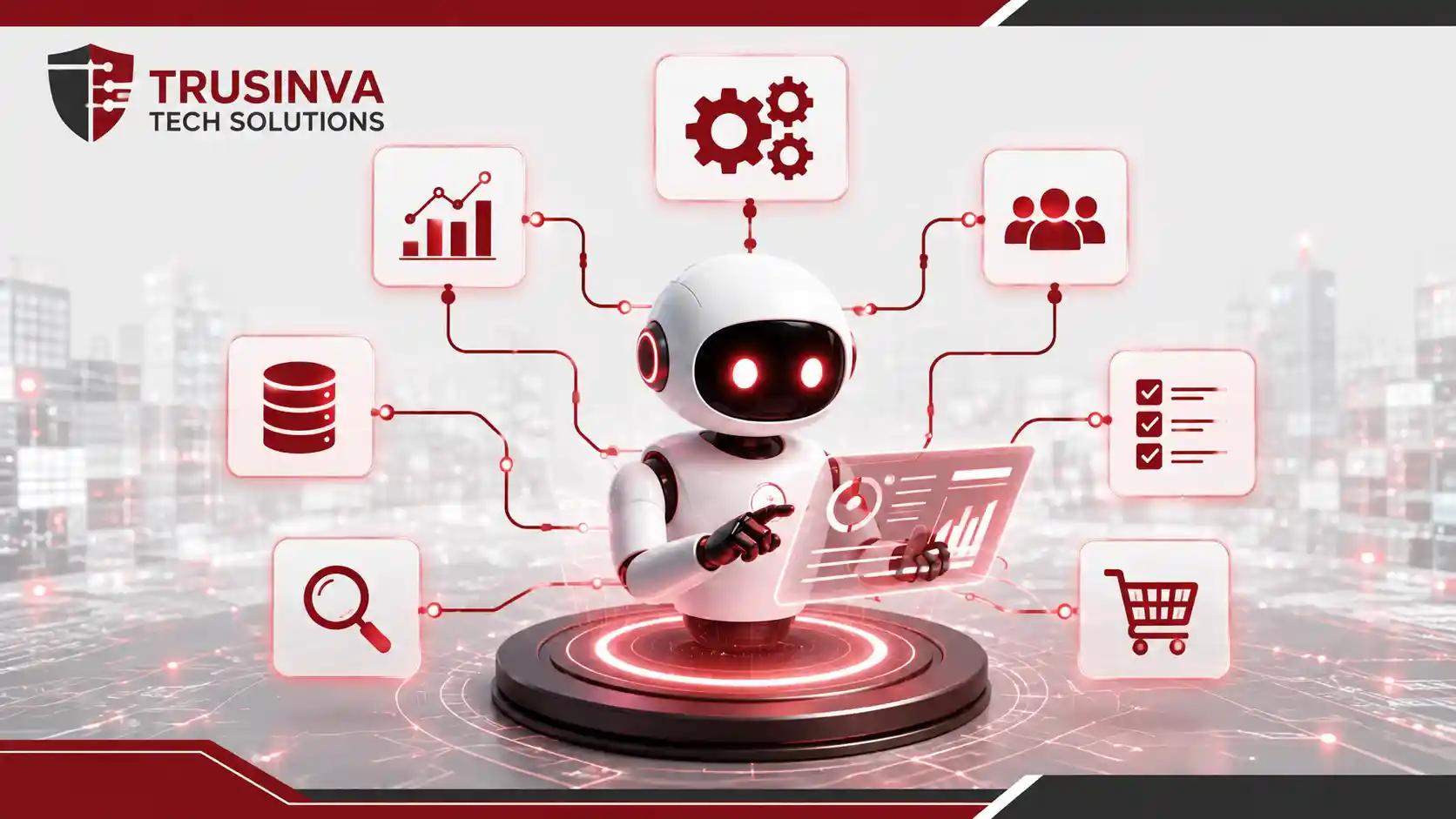
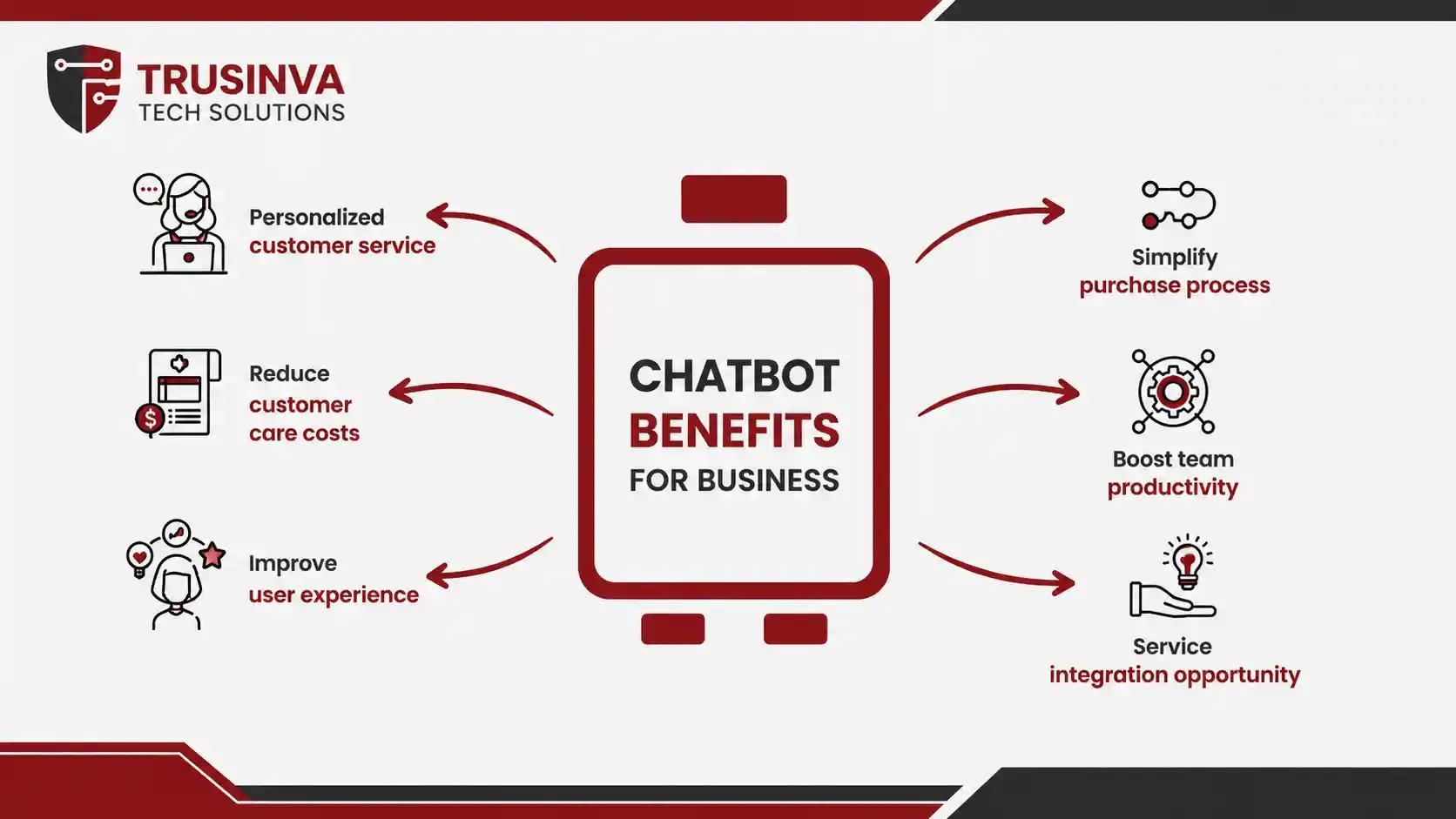
Direct answer: AI chatbots improve customer experience, increase website conversions, reduce support costs, and provide valuable analytics — making them one of the highest-ROI automation tools for modern businesses.
- Instant support: Visitors get answers in seconds, any time of day
- Higher conversions: Immediate engagement keeps potential customers from leaving
- Lower costs: Automates repetitive queries, freeing up human agents for complex issues
- Lead qualification: Filters and scores leads before they reach your sales team
- Consistent experience: Delivers the same quality response every time
- Actionable data: Reveals common customer questions and pain points
Potential Disadvantages
Direct answer: AI chatbots aren't perfect — they can misunderstand highly complex or emotional queries, require ongoing training to stay accurate, and may frustrate customers if human handoff isn't built in properly.
Common limitations include:
- Difficulty handling highly emotional or sensitive customer issues
- Initial setup and training time investment
- Risk of inaccurate answers if the knowledge base isn't maintained
- Customer trust concerns around AI-only interactions
Important Note: The most successful chatbot deployments always include a clear, easy path to a human agent. AI should assist, not fully replace, human support.
AI Chatbot vs Traditional Live Chat
| Factor | AI Chatbot | Traditional Live Chat |
| Availability | 24/7 | Limited to agent hours |
| Response Time | Instant | Minutes to hours |
| Cost at Scale | Lower | Higher (more agents needed) |
| Consistency | High | Varies by agent |
| Complex Query Handling | Improving, but limited | Strong |
| Personal Touch | Moderate | High |
The best setups in 2026 combine both — AI handles volume and speed, while human agents step in for nuanced or high-value conversations.
How Much Does an AI Chatbot Cost
Direct answer: AI chatbot costs range from free basic plugins to $500–$5,000+ per month for custom-built enterprise solutions, depending on complexity, integrations, and conversation volume.
| Chatbot Type | Estimated Cost |
| Basic template/plugin chatbot | Free – $50/month |
| Mid-tier SaaS chatbot platform | $100 – $500/month |
| Custom AI chatbot (business-specific) | $3,000 – $15,000 one-time + hosting |
| Enterprise AI chatbot with CRM/API integration | $10,000 – $50,000+ |
Businesses planning a broader software investment alongside a chatbot should also review typical software development costs in 2026 to budget accurately across the full project.
How to Implement an AI Chatbot: Step-by-Step
- Define your goals — support, lead generation, or both
- Choose your platform — off-the-shelf SaaS or custom-built solution
- Build your knowledge base — FAQs, product info, policies
- Integrate with your CRM and support tools
- Test conversation flows before launch
- Set up human handoff for complex queries
- Monitor analytics and refine responses over time
Businesses without an existing CRM should consider pairing chatbot implementation with CRM development to fully capture and act on qualified leads.
Common Mistakes Businesses Make
- Launching without a well-built knowledge base
- Skipping the human handoff option entirely
- Ignoring chatbot analytics after launch
- Choosing a generic bot instead of one trained on business-specific data
- Failing to update the chatbot as products or policies change
Expert Tips and Best Practices
- Start with a focused use case (support or lead gen) before expanding scope
- Train the chatbot on real customer FAQs, not assumptions
- Review conversation logs monthly to catch gaps in knowledge
- Keep tone aligned with your brand voice
- Always give customers a visible option to reach a human agent
Pairing a chatbot with strong on-site SEO also compounds results — see our guide on easy SEO tips to rank your website for complementary strategies.
Future Trends in AI Chatbots (2026 and Beyond)
AI agents are moving beyond simple Q&A into full task completion — booking appointments, processing returns, and updating CRM records autonomously. Retrieval-Augmented Generation is making chatbots more accurate by pulling real-time business data instead of relying solely on pre-trained knowledge. Expect tighter integration with WhatsApp Business, Instagram, and Microsoft Teams as omnichannel support becomes the standard, not the exception.
FAQs
Q: What is the best AI chatbot for a small business website? A: The best choice depends on budget and needs — small businesses often start with mid-tier SaaS platforms, while growing businesses benefit more from a custom-built chatbot tailored to their workflows.
Q: Do AI chatbots replace human customer support? A: No. AI chatbots handle repetitive and high-volume queries, while human agents remain essential for complex, sensitive, or high-value conversations.
Q: How long does it take to implement an AI chatbot? A: Basic chatbot setup can take days, while custom AI chatbots with CRM integration typically take 4–8 weeks depending on complexity.
Q: Are AI chatbots safe for customer data? A: Reputable AI chatbot platforms comply with GDPR, CCPA, and SOC 2 standards, but businesses should always verify a vendor's data security practices before implementation.
Q: Can AI chatbots generate leads, not just answer questions? A: Yes. Modern AI chatbots qualify leads by asking targeted questions and can automatically pass qualified leads into a CRM for follow-up.
Q: What's the difference between a chatbot and a virtual assistant? A: A chatbot typically handles conversational Q&A, while a virtual assistant often performs broader tasks like scheduling, processing orders, or managing workflows.
Q: Does an AI chatbot work on platforms like Shopify or WordPress? A: Yes, most AI chatbot solutions integrate with major platforms including WordPress, Shopify, WooCommerce, and Wix.
Conclusion
An AI chatbot for business websites is no longer a luxury — it's become a core part of delivering fast, consistent customer experiences in 2026. The businesses seeing the best results are the ones that pair the right platform with a well-built knowledge base, clear human handoff, and ongoing optimization. If you're ready to add a custom AI chatbot to your website or want it integrated with your CRM and support workflows, reach out to Trusinva Tech Solutions through our contact page — or explore our full services to see how we can support your digital growth. Ready to get started? Book a Seat with our team today for a personalized AI chatbot consultation.