What if your next six-figure commission isn't lost because of the market—but because your CRM failed to follow up? Before you invest in another tool, read this first.
If you're a real estate agent or brokerage owner, you already know the game has changed. Buyers expect instant replies. Leads dry up if you don't follow up within minutes. And juggling spreadsheets to track hundreds of contacts just doesn't cut it anymore.
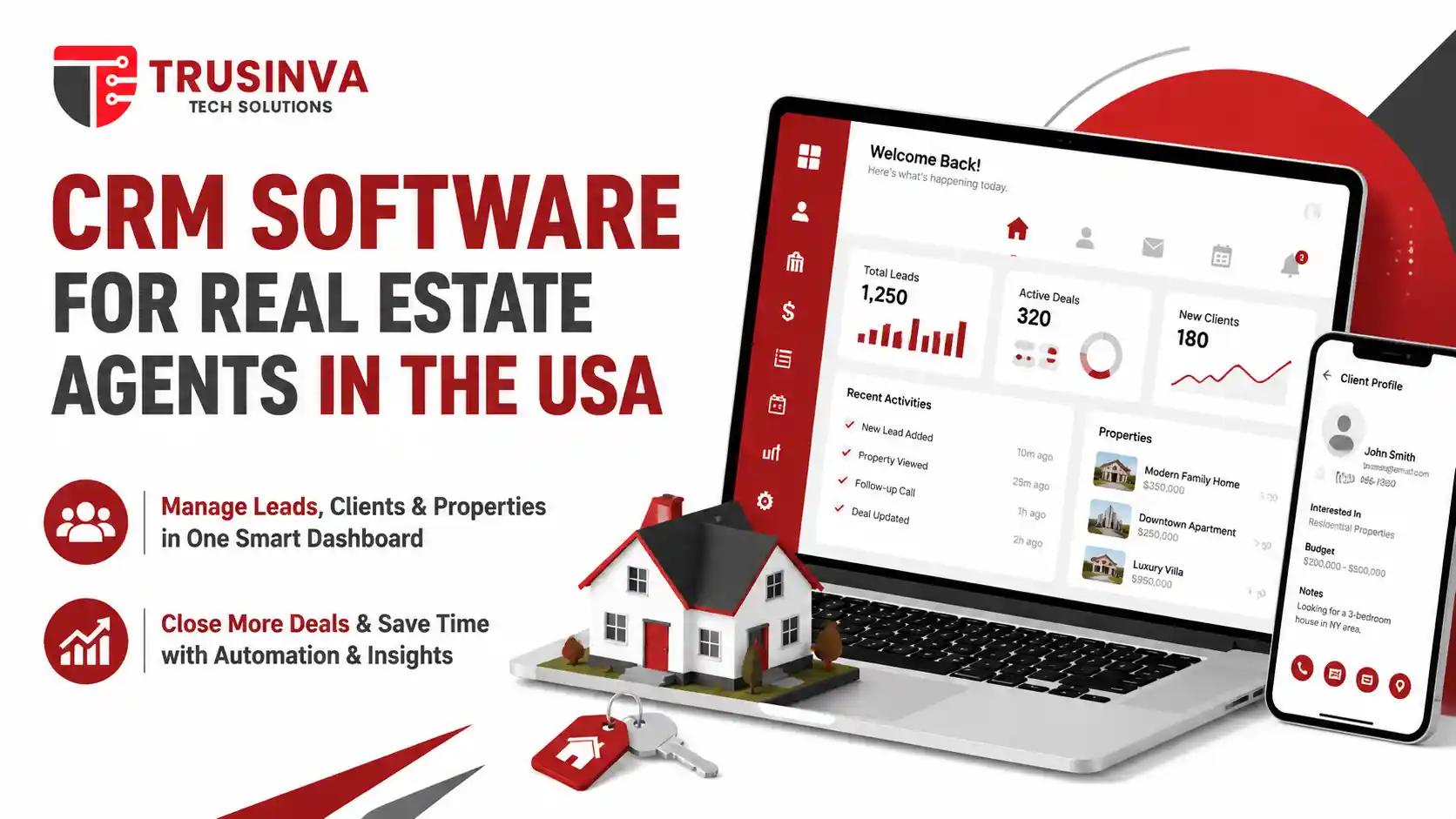
That's where CRM software for real estate agents comes in. A good real estate CRM helps you manage leads, automate follow-ups, track deals, and close more sales without the daily chaos.
In this guide, we'll break down what real estate CRM software actually does, why it matters for agents and brokerages across the USA, and how to choose the right one for your business.
What Is CRM Software for Real Estate Agents?
A Real Estate CRM (Customer Relationship Management) software is a digital system built to help agents and brokers manage their contacts, leads, listings, and client communication in one place.
Instead of juggling spreadsheets, sticky notes, and scattered emails, a CRM for realtors keeps everything organized: buyer inquiries, seller leads, follow-up reminders, deal stages, and even MLS-linked property data.
Think of it as a digital assistant that never forgets a lead, never misses a follow-up, and gives you a clear picture of where every deal stands.
Why It Is Important for Real Estate Businesses
Real estate is a relationship-driven business. Every missed call or delayed email can mean a lost commission.
A real estate lead management software solves that problem by automating the busy work so agents can focus on closing deals instead of chasing paperwork.
This matters whether you're:
- An independent realtor in Texas managing your own leads
- A growing brokerage in California scaling a sales team
- A property management company handling hundreds of tenants and owners
- An international real estate firm working with clients across different time zones
The need is universal. Buyers today research online, compare agents, and expect fast, personalized responses. A CRM with MLS integration and automated follow-ups gives agents the speed and consistency modern clients expect.
For agencies looking to build something tailored to their exact workflow, custom CRM development services are increasingly popular over generic, one-size-fits-all platforms.
Key Benefits of Using a Real Estate CRM
A well-built CRM isn't just a contact list. It's a growth engine for your business. Here's what it actually delivers:
- Better lead management – Capture, organize, and prioritize buyer and seller leads automatically
- Automated follow-ups – Email and SMS automation keeps leads warm without manual effort
- Higher conversion rates – AI lead scoring helps agents focus on the hottest prospects first
- Centralized data – One dashboard for contacts, listings, deals, and communication history
- MLS and IDX integration – Sync property listings directly into your CRM
- Mobile access – Manage your pipeline from anywhere, even during property showings
- Time savings – Less manual data entry means more time for actual selling
- Better team collaboration – Brokers can track agent performance and pipeline health in real time
- Improved client experience – Faster responses and personalized communication build trust
Real estate businesses that adopt CRM software typically report faster response times, better lead-to-client conversion, and stronger long-term client relationships.
Step-by-Step Process: How to Implement a Real Estate CRM
Adopting a CRM doesn't have to be overwhelming. Here's a simple roadmap:
- Identify your needs – Are you a solo agent, a team, or a brokerage? Your CRM needs will differ.
- List your must-have features – MLS integration, lead scoring, email automation, mobile app, etc.
- Compare CRM options – Look at pricing, ease of use, scalability, and support.
- Import your existing contacts – Migrate your current leads and client data into the new system.
- Set up automation workflows – Configure follow-up emails, SMS reminders, and lead assignment rules.
- Train your team – Even the best CRM fails if your agents don't use it properly.
- Track performance and optimize – Use CRM analytics to refine your sales process over time.
If your team lacks the technical bandwidth to handle setup and customization, working with a CRM development company can save weeks of trial and error.
Common Mistakes Real Estate Businesses Make
Even with the right CRM software, many agencies fail to get real value from it. Here are the most common mistakes:
- Choosing a generic CRM instead of one built for real estate workflows
- Skipping team training, so agents revert back to spreadsheets and memory
- Not integrating MLS data, causing duplicate manual work
- Ignoring automation features, missing out on faster follow-ups
- Overloading the CRM with unnecessary fields, making it harder to use daily
- Not reviewing CRM analytics, so inefficiencies go unnoticed
- Picking software that doesn't scale as the team grows
Avoiding these mistakes is often the real difference between a CRM that gathers dust and one that actually drives sales.
AI CRM Trends in 2026
Real estate CRM technology is evolving fast. In 2026, agencies are increasingly adopting:
- AI lead scoring to prioritize high-intent buyers and sellers
- Predictive analytics to forecast which leads are likely to convert
- Conversational CRM tools that handle initial buyer inquiries automatically
- Voice AI CRM features for hands-free updates during property visits
- No-code CRM customization, letting agents adjust workflows without developers
Agencies that stay ahead of these trends tend to close deals faster and spend less on wasted ad spend chasing cold leads.
Why Choose Trusinva Tech Solutions
At Trusinva Tech Solutions, we help real estate agencies, brokers, and property management companies build CRM systems that actually fit how they work — not generic templates that force you to change your process.
Our team specializes in:
- Custom CRM Development — built around your lead flow, MLS integration needs, and sales pipeline
- Web Development — real estate websites that capture and convert leads automatically
- Mobile App Development — so agents can manage clients on the go
- SEO Services — helping real estate businesses rank higher and get found by buyers and sellers
- Digital Marketing — including Google Ads and social media strategies to fill your pipeline
- Truck Dispatching and Medical Billing Software Solutions — for businesses outside real estate looking for industry-specific CRM and operational systems
We've also worked with businesses that needed CRM systems integrated with accounting, ERP, or MLS platforms — proof that a well-built CRM isn't just software, it's a growth tool.
Beyond development, we also offer specialized training through our courses, including Truck Dispatching, Medical Billing, and taxation courses covering USA, UK, UAE, and KSA markets — helping professionals build in-demand skills alongside our software solutions.
You can explore our full range of offerings on our services page, see real client work in our projects portfolio, or read more insights on our blog.
FAQ
What is the best CRM software for real estate agents? The best CRM depends on your business size and needs. Independent agents may prefer simple, affordable tools, while brokerages often need custom CRM development with MLS integration and team collaboration features.
How much does a real estate CRM cost? Pricing varies widely — from free basic plans to enterprise-level custom builds. Custom CRM development costs depend on features like automation, MLS integration, and mobile access.
Do realtors really need CRM software? Yes. Without a CRM, leads get lost, follow-ups get missed, and agents spend more time on admin work than selling. A CRM keeps the entire sales process organized and consistent.
Which CRM integrates with MLS? Many real estate CRMs offer MLS and IDX integration, but the level of integration varies. Custom-built CRMs can be tailored to sync directly with your local MLS system.
Can AI improve CRM for real estate? Absolutely. AI lead scoring, predictive analytics, and automated follow-ups help agents focus on the hottest leads and respond faster than manual methods allow.
Is it better to buy a CRM or build a custom one? Off-the-shelf CRMs work for basic needs, but growing agencies often outgrow them quickly. A custom real estate CRM development approach ensures the system scales with your business.
Conclusion
A strong CRM isn't just software — it's the backbone of a modern real estate business. From lead management and automation to AI-powered insights, the right CRM helps agents close more deals with less manual effort.
Whether you're an independent agent, a growing brokerage, or a property management company, investing in the right CRM system in 2026 can be the difference between staying reactive and scaling with confidence.
Contact Trusinva Tech Solutions today for professional digital services and business growth. Visit our contact page or learn more about us to get started.